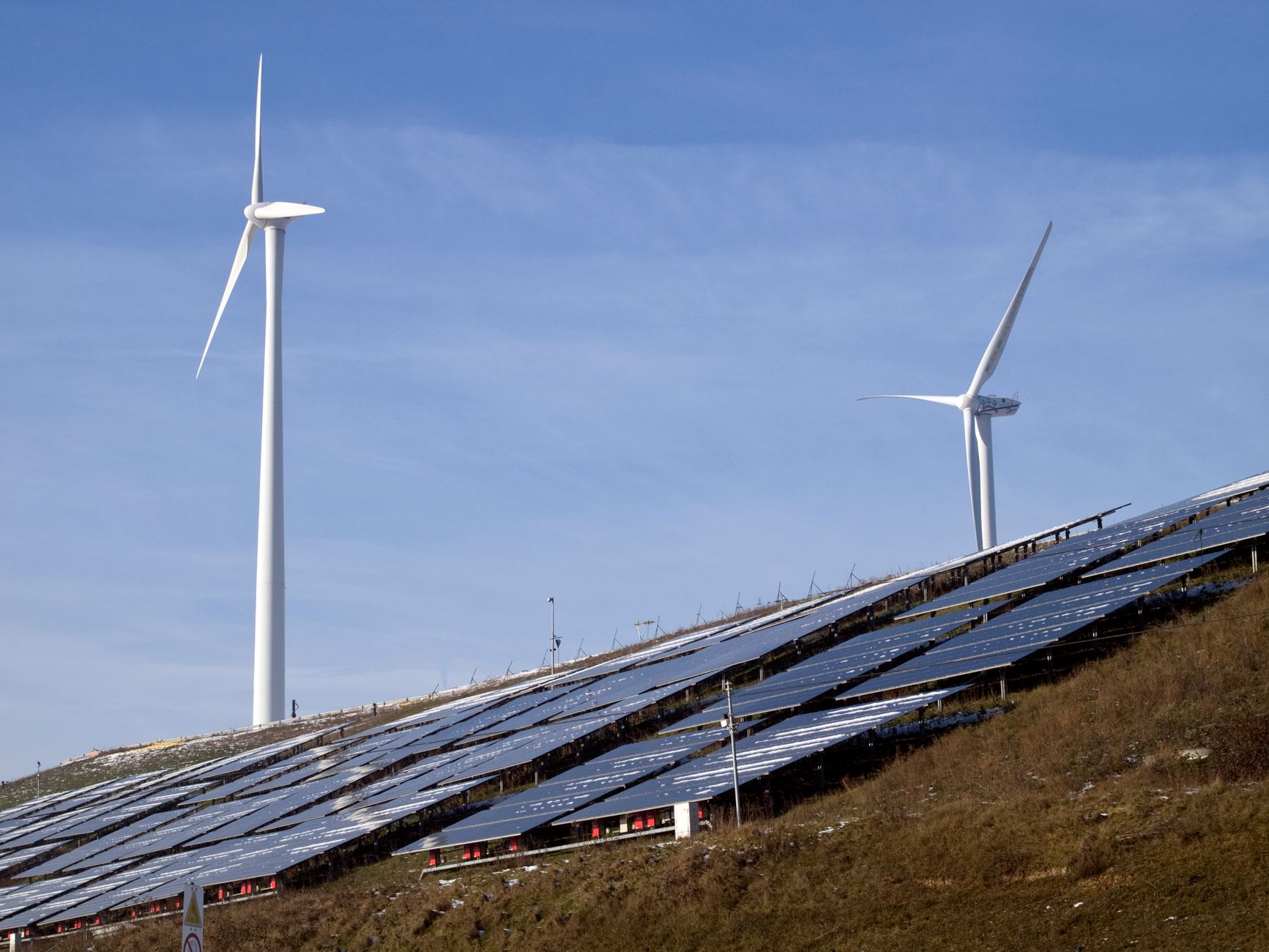
The world is deploying renewable energy at an unprecedented pace. In Renewables 2024, the International Energy Agency projects that around 5,500 GW of new renewable capacity will become operational between 2024 and 2030 under then-current policies and market conditions. Global capacity would reach 2.7 times its 2022 level.
That is a dramatic transformation, but still short of fully meeting the COP28 goal agreed by nearly 200 countries to triple global renewable capacity by the end of the decade.
Solar and wind dominate growth
According to the IEA, solar PV and wind together account for 95% of expected renewable capacity growth. Solar alone represents about 80% of new renewable power capacity added through 2030, supported by falling costs, relatively short development times and deployment across both utility-scale and distributed projects.
Growth is highly uneven. China is expected to account for around 60% of global expansion, while the European Union and United States are forecast to double their pace of renewable capacity growth between 2024 and 2030. India is projected to be the fastest-growing major economy.
The grid becomes the bottleneck
Once technologies become cheap and widely available, constraints move elsewhere. In many markets the challenge is no longer obtaining panels or turbines, but connecting projects to the grid, securing permits and managing variable generation. The IEA notes that curtailment is already meaningful in systems where grid investment has not kept pace.
Storage, demand response, interconnectors and grid digitalisation therefore become essential. The transition is not simply about replacing one power plant with another; it requires a more flexible electricity system.
China and the industrial dimension
China’s leadership extends beyond installed capacity. It has developed large manufacturing supply chains for panels, components and batteries. That scale has helped reduce global costs while creating industrial dependencies that Europe and the United States are trying to address with domestic manufacturing policies.
Competition in the energy transition is therefore shifting from generation alone toward manufacturing, supply-chain control and infrastructure.
Why tripling remains difficult
The IEA’s accelerated case suggests the global tripling goal remains technically within reach, but policy improvements are needed. Key obstacles include slow permitting, high financing costs in emerging markets, weak grids and limited visibility over future auction volumes.
The 5,500 GW figure therefore tells two stories at once: renewable growth is now structural, but the next phase will be determined by grid quality and industrial policy. Installing capacity is only the first step; integrating it efficiently is the real test of the decade.