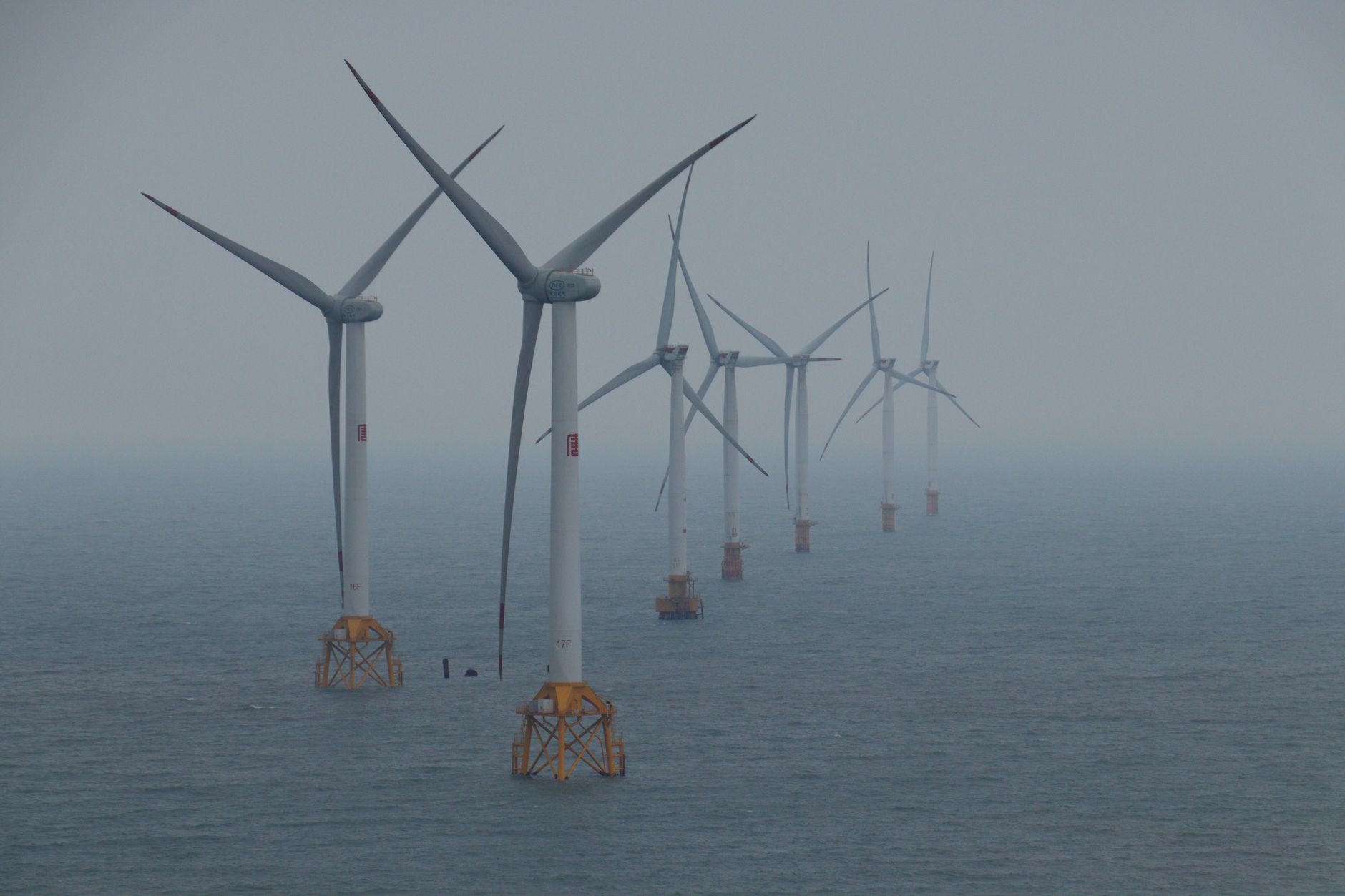
RWE and KKR have reached financial close on Vanguard West and Vanguard East, two offshore wind farms that will collectively add approximately 2.8 GW of capacity in the British North Sea. The transaction consolidates a 50-50 joint venture between the German energy group and the US fund, unlocking the execution phase of one of the largest offshore wind programs currently under development in the United Kingdom.
The two facilities will be located between 50 and 80 kilometres off the coast of Norfolk, in eastern England. Each project will have a capacity of nearly 1.4 GW. Once fully operational, according to the developers' estimates, the cluster will produce electricity equivalent to the consumption of around three million British homes. Offshore construction is expected to begin in early 2027, with completion of both wind farms scheduled for 2030.
For the industry, the significance lies not only in the scale of the facility. The financing brings together private capital, British government support, and European export credit guarantees in a structure that RWE points to as the largest project financing ever secured for offshore wind in the United Kingdom. It is an important milestone in a market that must turn highly ambitious installed capacity targets into viable construction sites, supply chains, and grid connections.
An investment of around 12 billion pounds
The financial package comprises 11.1 billion pounds in cash facilities and an additional 1.7 billion in ancillary facilities, provided by a consortium of 35 international banks. The total investment value across the two wind farms, including associated transmission infrastructure, is estimated at approximately 12 billion pounds.
The bank lending is complemented by equity contributions from RWE and KKR. The structure is non-recourse project financing: in practical terms, debt repayment is linked primarily to the cash flows the facilities will generate, rather than the general balance sheets of the shareholders. For offshore developments of this scale, where turbines, foundations, cables, and maritime operations require massive upfront capital expenditures, securing contracted revenues and guarantees is decisive in attracting long-term debt.
One billion pounds comes from the British National Wealth Fund. Risk coverage also benefits from the backing of Euler Hermes, the German export credit agency, and EIFO, the Danish export and investment fund. The presence of these entities also reflects the transnational industrial nature of the project: construction will take place in British waters, but the supply chain and financing involve expertise and institutions from several European countries, alongside KKR's capital.
CfD contracts and Vestas turbines reduce uncertainties
The bankability of the projects rests on contracts for difference, or CfDs, awarded to Vanguard West and Vanguard East in the United Kingdom's seventh allocation round, concluded in January 2026. The contracts run for twenty years and establish a strike price of 91.20 pounds per MWh, expressed in 2024 prices. The mechanism offers producers greater revenue predictability compared to sole exposure to the wholesale electricity price, a factor that is particularly critical for facilities requiring multi-billion investments before producing their first MWh.
The corporate process began in December 2025, when RWE and KKR announced the fund's intention to acquire 50% of both assets. With the completion of the transaction, the joint venture is now formally established. The two companies will develop, build and operate the wind farms together, while RWE will retain the lead role in project delivery on behalf of the partnership.
A significant portion of the procurement has already been secured. RWE ordered 92 V236-15 MW turbines from Vestas for each wind farm: 184 15 MW wind turbines, for a total nominal capacity of 2.76 GW, rounded to 2.8 GW in the cluster's designation. The size of the machines allows capacity to be concentrated in a smaller number of positions compared to previous generations, but simultaneously increases the demands on port logistics, marine vessels, installation and maintenance.
Monopile production for Vanguard West has already begun at Haizea Wind Group. Lamprell, meanwhile, will manufacture 184 transition pieces—the connecting components between foundation and tower—destined for both sites. These contracts anticipate the transition from planning to construction and reduce the risk of having to secure essential components at a later stage, when the manufacturing capacity of the offshore supply chain can become a bottleneck.
The test now shifts to construction and the grid
The first operational milestone highlighted by the partners is the installation of the Vanguard West foundations in the first half of 2027; Vanguard East will follow later. The roadmap therefore leaves several years to complete offshore works, turbine assembly, electrical systems, and onshore grid connection infrastructure. The schedule is credible on paper because procurement and preparations are already well advanced, but it remains exposed to typical offshore variables: availability of specialized vessels, weather conditions, delivery lead times, and coordination among suppliers.
The reference to transmission infrastructure within the total investment value deserves attention. Adding gigawatts of capacity in the North Sea does not just mean installing wind turbines: the power must reach the coast and then enter a grid capable of absorbing and distributing it. For the United Kingdom, where decarbonizing the power system requires both new renewable generation and grid investments, the delivery of major projects like Vanguard is therefore also tied to the timely completion of associated electrical works.
Finally, the deal signals that private capital continues to require clear terms to finance utility-scale offshore wind. KKR takes a 50% stake, but RWE's role as developer and operator, the allocation of CfDs, supplier commitments, and the involvement of banks and public institutions distribute risks across multiple parties. It is this combination, rather than the sheer 2.8 GW scale alone, that makes the Vanguard case a benchmark for upcoming major projects in the North Sea.
If the project stays on schedule, by 2030 the two plants will deliver a significant share of the UK's new renewable capacity. Until then, the industry will primarily watch the construction site's progress, the advancement of the foundations, and the European supply chain's ability to support an order based on 15 MW turbines without delays or cost increases severe enough to put pressure on already finalised financing.