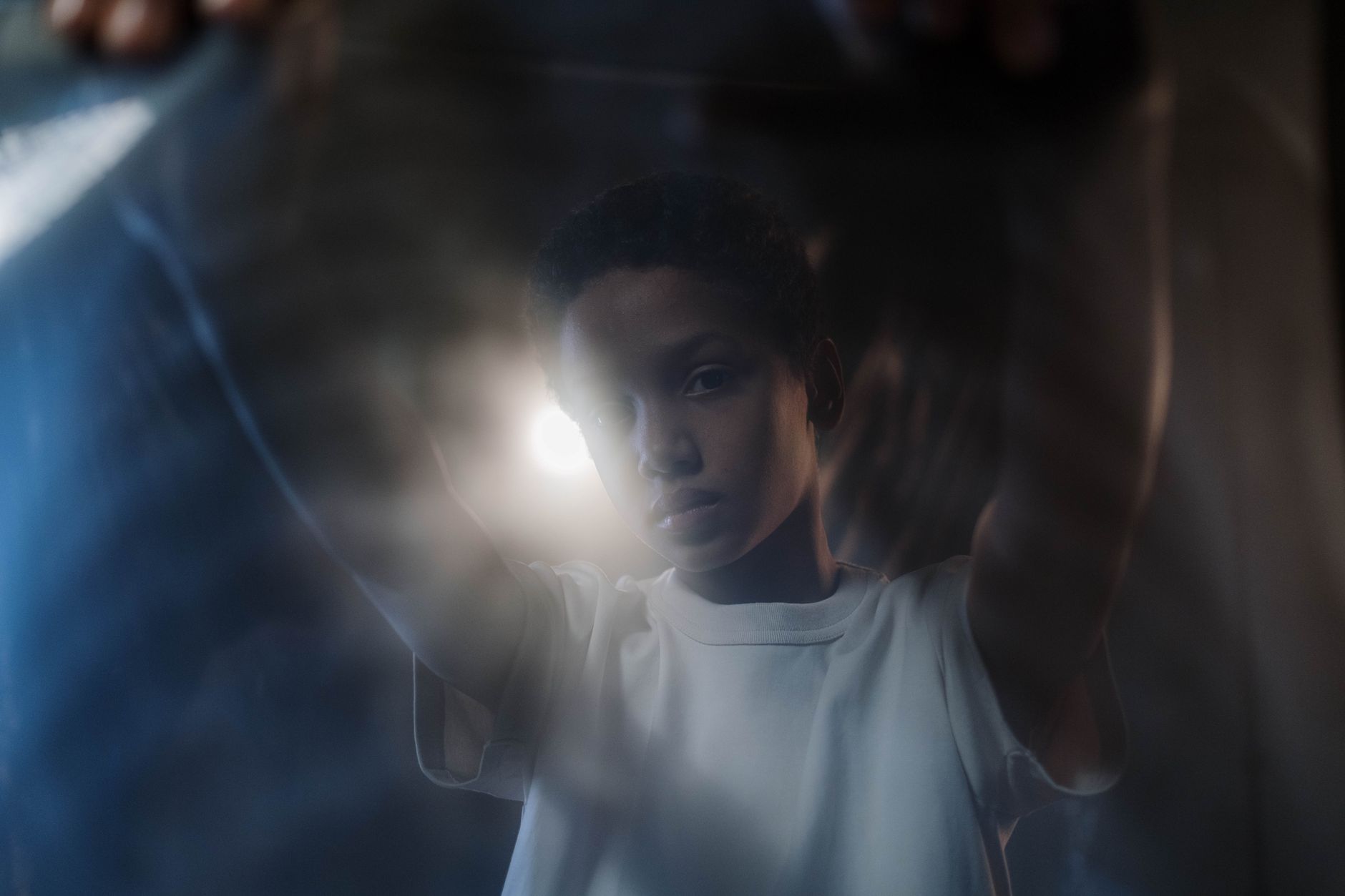
For Sophie Okonedo, autumn 2026 takes the unusual shape of a double theatrical release, both far from the machinery of major franchises and both capable of entrusting her with central dramatic weight. The British actress, an Oscar nominee for Hotel Rwanda and Tony Award winner, stars in Mouse, a family drama directed by Kelly O’Sullivan and Alex Thompson arriving on November 6, and in Clarissa, a Lagos-set reimagining of Virginia Woolf’s universe directed by brothers Arie Esiri and Chuko Esiri. The second title will screen in North America at the Toronto International Film Festival ahead of its December 11 release.
It is not the kind of coincidence that redefines a filmography on its own. Okonedo has been working steadily for decades, alternating between stage, television, and film, and in recent years has also appeared in popular series such as Slow Horses and The Wheel of Time. However, the convergence of the two projects highlights a distinct phase: a return to characters written to support their full complexity, in smaller productions that must find audiences, distribution, and critical visibility outside the more established industry shortcuts.
The timing comes while the actress is engaged in London in A Month in the Country, an adaptation of Ivan Turgenev. It serves as a reminder of the trajectory that has made her a particularly stalwart figure on the British scene: a presence capable of moving from the great theatrical tradition to broad-reach series without giving up on projects that are more fragile from a production standpoint. On Broadway and in the West End, she has earned accolades for productions such as A Raisin in the Sun and Medea; cinema, by contrast, has not always offered her roles of equal depth with the same frequency.
Two small films, two roles at centre stage
Clarissa brings Woolfian material into contemporary Lagos. Okonedo plays the protagonist, a woman preparing for a party who navigates relationships, memory, and personal tensions over the course of the day. The Esiri brothers' project does not aim to replicate Virginia Woolf's original context: rather, it uses that narrative structure to observe it in another city, within a different social and cultural reality. For an international market that often confines African stories to narrow formulas, the film stakes out more ambitious ground: a literary adaptation, an urban narrative, and an ensemble piece led by a mature female protagonist.
Mouse operates on a very different register. Directed by O’Sullivan and Thompson, the family drama casts Okonedo as a mother grappling with grief. Here, the acting required is not a continuous display of emotion: grief is treated as a condition that reshapes silences, gestures, domestic dynamics, and the capacity to communicate. They are two very different characters in setting, pacing, and construction, yet united by a focus rare for an actress of her generation: not supporting figures, not functional plot authorities, but women through whom the films organize their gaze.
This centrality is also significant in light of Okonedo's recent filmography. Her television prominence has confirmed her ability to make a mark in just a few scenes, but high-profile serials often distribute the narrative across many characters, reserving prestigious functions for seasoned performers rather than genuine internal arcs. Clarissa and Mouse seem to offer her the opposite: the time required to bring out hesitations, contradictions, and transformations without reducing them to a single recognizable trait.
Waiting as a career choice
Okonedo also attributes this moment to a practical decision: working less and waiting. This is neither an abstract luxury nor the rhetoric of an artist rejecting the market. The ability to say no depends on concrete economic and personal circumstances. The actress explained that she was able to rely on a few television jobs and a low-overhead lifestyle, without an entourage of assistants around her. That leeway allowed her to remain available for low-budget films—productions that often operate on uncertain timelines and cannot lock in a cast months or years in advance as studios do.
It is an instructive dynamic for the audiovisual industry. Much is said about the difficulties independent cinema faces in financing original projects, but there is also an issue of creative availability: when fees and production windows are limited, an independent film can only afford a major performer if that performer has the financial leeway to accept it. The system rewards constant presence, visibility, and multi-year deals; works like Mouse and Clarissa, by contrast, require patience from producers and a certain degree of freedom from talent.
In Okonedo's case, the strategy does not mean abandoning television or theater. Rather, it seems like a way to keep a packed schedule from ruling out less predictable opportunities. The stage continues to guarantee her a vital creative outlet, series maintain a connection with broad audiences, while independent films become the place to focus on riskier, less standardized roles. It is a balance many performers seek, but few can maintain consistently, especially outside the market's most protected tiers.
The festival season and the limit of visibility
The North American premiere of Clarissa in Toronto opens an important window. TIFF remains a valuable hub for titles aiming to build buzz among the press, distributors, and North American audiences ahead of release. For a film set in Lagos and directed by two Nigerian filmmakers, the festival can serve as an international amplifier; however, it does not replace the work required after the premiere, from distribution to campaigns targeting awards voters.
Mouse too, backed by O’Sullivan and Thompson's reputation on the US independent circuit, enters a crowded season. Every year, autumn concentrates titles designed to carve out space in critical conversations and awards races, but the quality of the performances guarantees neither screens nor audiences. For productions of this scale, word of mouth, festival reception, and distributors’ ability to build a narrative around the cast remain decisive.
Okonedo’s simultaneous presence in both films could benefit both, allowing the works to be read as a moment of recognition for an actress who is already respected, yet has so far been used inconsistently by cinema. However, it should not be turned into definitive compensation for a career: two titles do not automatically correct the unequal opportunities affecting performers who are women, Black, and over 50. If anything, they show how much unexplored material still exists when casting stops treating experience as merely ornamental.
The most tangible outcome of this season will be measurable over the coming months, through audience reactions, theatrical staying power, and both films' journey on the awards circuit. Meanwhile, Clarissa and Mouse offer Sophie Okonedo something her stage career had already long demonstrated: the space to let a character breathe, evolve, and linger in the memory beyond a single scene.


