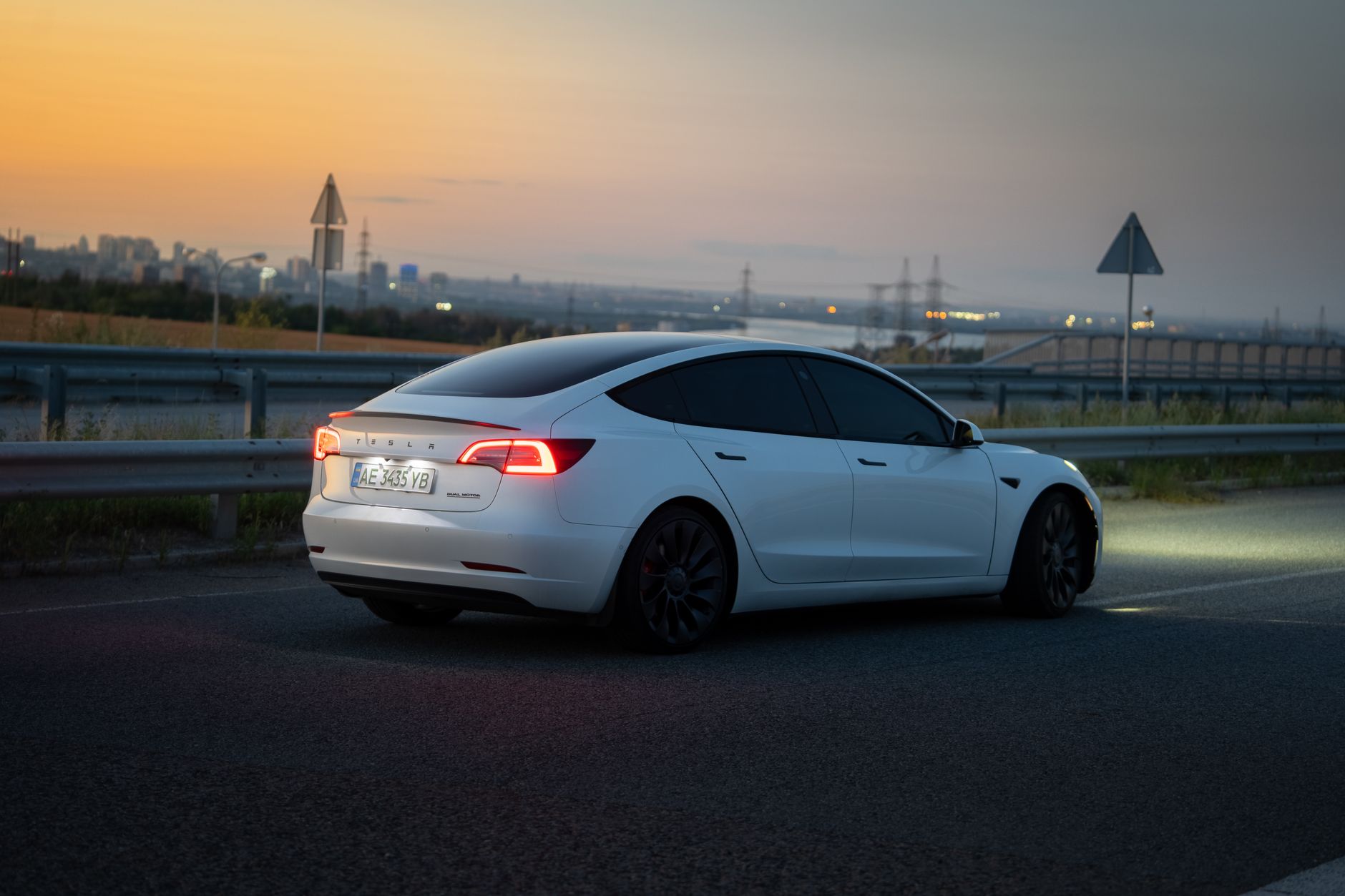
On the afternoon of April 14, 2025, a 2024 Tesla Model Y left the roadway on Interstate 35 in Daviess County, Missouri, and struck a guardrail. The driver, a 64-year-old woman residing in Raymore, died at the scene. According to the Missouri State Highway Patrol, it was a single-vehicle accident: the car was traveling southbound near mile marker 68 close to Pattonsburg when it ran off the west side of the road.
Initial reports of the crash contained no reference to Tesla's driver-assist systems. However, a filing submitted by the company to the National Highway Traffic Safety Administration (NHTSA), uncovered through an analysis of federal data conducted by Electrek, adds a relevant detail: a Level 2 driver assistance system was engaged at the time of the impact.
The clarification matters primarily for what it does not allow one to conclude. The filing does not, on its own, prove that the system caused the vehicle to leave the road, nor does it definitively identify the feature in use. Tesla redacted information regarding the system, hardware, and software version, as well as the incident's narrative summary and the field detailing operating conditions. What remains is a specific yet important fact: the car left the highway at high speed while electronic driving assistance was engaged.
The federal filing and the limits of available data
Tesla's report falls under NHTSA's Standing General Order, the mechanism through which the US regulator requires automakers to report crashes involving advanced driver-assist systems when they are engaged within 30 seconds of an impact. It is a reporting requirement, not a determination of technical or legal liability for the crash.
In the case of the Model Y, Tesla classifies the incident as fatal and indicates a collision with a fixed object. The recorded speed before the crash was 73 mph, approximately 117 km/h, on a stretch of road with a 70 mph speed limit. The company also states that it possesses both the event data recorder and telematics data from the vehicle. While these sources could help reconstruct the dynamics with greater accuracy, the details needed to understand why the car left the roadway are not accessible in the public document.
Another limitation concerns the naming of the system. On a high-speed road like I-35, the active support could have been either basic Autopilot or Full Self-Driving (Supervised), Tesla's commercial feature that still requires constant driver supervision in all cases. With the available information, it is not possible to attribute the incident to either configuration, nor to know which software release was installed.
The filing dates back to an April 2025 crash and predates the introduction of the “Verified Engaged” indicator in Tesla's more recent reports. For this reason, the record shows that the system was engaged, but does not contain that subsequent additional verification. This does not change why the event was reported to the NHTSA: the vehicle's data detected the activation of the assistance system within the relevant window prior to the crash.
When lane departure becomes an industry metric
The Missouri crash falls into a category that warrants attention in the available Tesla crash data: lane or roadway departures. In Electrek's analysis of the NHTSA dataset, looking at incidents where the pre-crash maneuver is publicly disclosed, this is the most common type among Tesla crashes linked to an assistance system. The I-35 case exhibits its most severe characteristics: highway speed, a roadside barrier, and fatal consequences.
This is not enough to establish a common causal link between the system and every road departure. The circumstances that can lead a vehicle off the road are numerous: pavement conditions, road markings, obstacles, driver distraction or medical emergencies, sudden maneuvers, visibility, and mechanical factors. Distinguishing among these possibilities is precisely why more detailed documentation would be needed regarding the moments leading up to the impact, the inputs provided by the driver, steering behavior, and sensor readings.
However, the issue also concerns the level of transparency across the industry. Automakers collect significant amounts of telemetry from connected vehicles, while authorities and the public often receive aggregated datasets or partially redacted documents citing commercial confidentiality. In this case, Tesla states it possesses the data from the event, but redacts the very fields that would help distinguish the product's limitations from the driver's conduct or external conditions.
Autonomy promised, supervision required
The distinction between driver assistance and autonomous driving remains crucial. Autopilot and Full Self-Driving (Supervised) are Level 2 systems: they can manage certain longitudinal and lateral functions under specific conditions, but they do not transfer driving responsibility to the software. The driver must watch the road, maintain attention, and intervene immediately when necessary.
For Tesla, this gap is particularly sensitive, as the name Full Self-Driving can fuel expectations that exceed the product's actual operational capabilities. The company formally requires the Supervised system to be monitored by the user while simultaneously continuing to promote a vision of increasingly automated mobility. At the industry level, every serious crash involving an active system intensifies scrutiny over the intersection of marketing, interface design, attention monitoring, and driver responsibility.
The dilemma does not concern Tesla alone. The entire automotive sector is rolling out features on the road that relieve parts of the driving workload without removing the need for a human ready to retake control. How effectively a vehicle communicates its limits, detects driver attention, and manages unexpected situations is therefore a matter of safety, rather than an incidental detail of the in-cabin experience.
What remains to be determined
At this stage, public information does not allow for a clear determination of what caused the Model Y to veer off I-35. It is known that the driver was wearing a seatbelt, the vehicle struck a guardrail, and assisted driving was engaged prior to the crash. What remains unknown is the specific system, the software version, any warnings issued, the driver's response, and the exact trajectory and behavior of the vehicle in its final seconds.
The incident also highlights the value, and the inadequacy, of reporting requirements. Without Tesla’s report to NHTSA, the system’s activation would not have emerged from local public reports. On the other hand, extensive omissions in the data make it difficult to turn that report into a verifiable analysis of the dynamics. For regulators, manufacturers, and drivers, the difference between knowing that a system was on and understanding how it acted remains crucial.