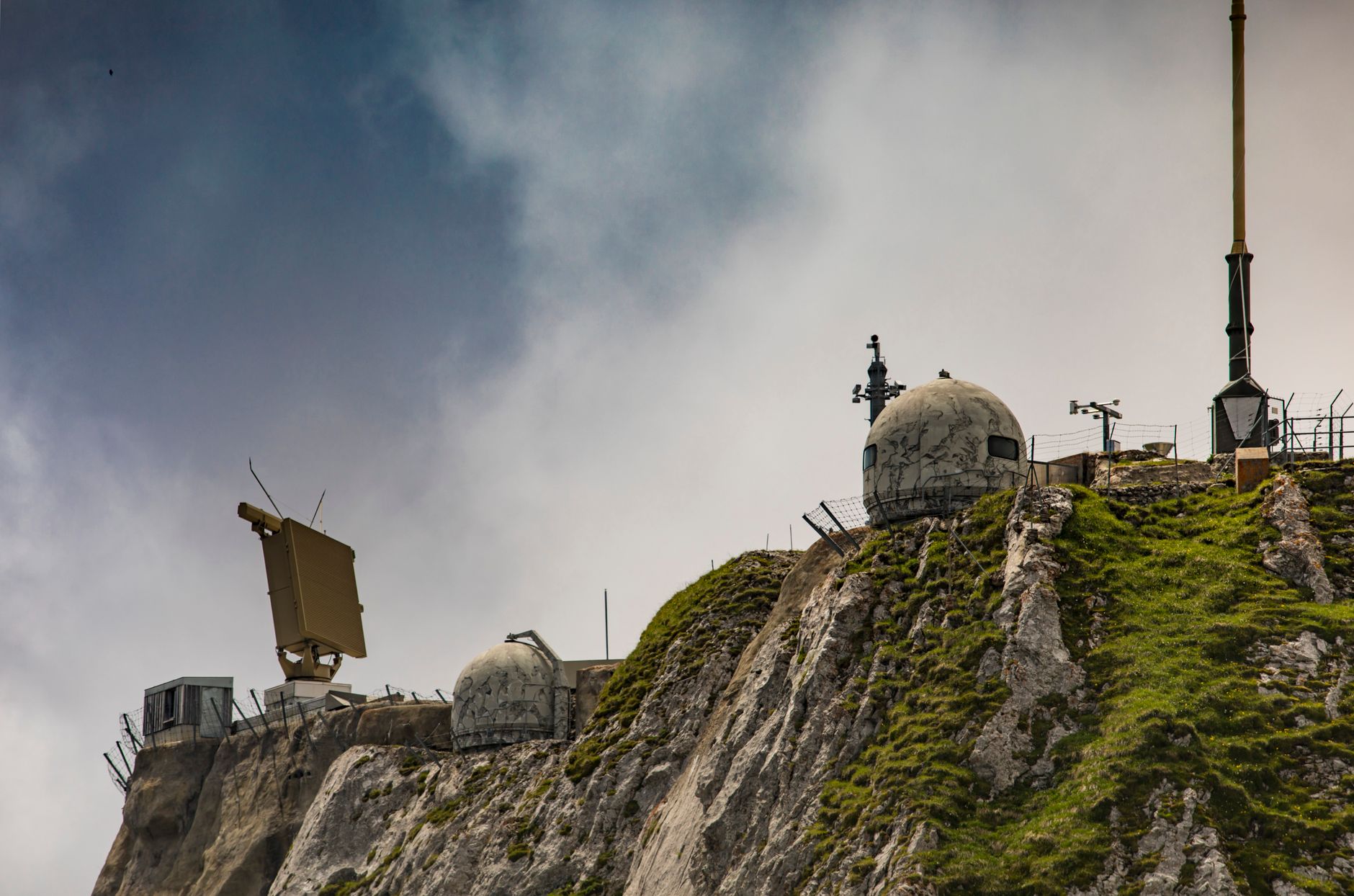
Belgium has chosen Thales' GM200 MM/C radars for Blue Dome, the new national layered air defence programme. The core element of the decision is not merely the procurement of a sensor to detect airborne targets: Bruxelles aims to build an integrated chain in which radar, command and control, and engagement systems operate on the same operational picture.
For Belgium, located in an area densely connected from both a military and civilian standpoint, the availability of mobile, distributed air surveillance addresses the need to track highly diverse threats. Drones, loitering munitions, aircraft, helicopters, missiles, and artillery fire feature different signatures, altitudes, and reaction times. Blue Dome will therefore need to combine multiple layers of protection, and the GM200 MM/C is intended to provide the shared radar picture upon which target identification and any subsequent engagement allocation depend.
Thales has disclosed neither the number of radars ordered, nor the contract value, nor a delivery schedule. These are key data points, as they will determine the effective coverage Belgium can deploy and the pace at which the project transitions from integration to operational service. However, the announcement clarifies the chosen direction: a networked architecture designed to cooperate with neighbouring allies' defences rather than creating an isolated national system.
A sensor node for layered air defence
Blue Dome is presented as a multi-layered ground-based air defence capability. In this configuration, the radar is not the effector: it does not directly intercept the threat, but must detect it, track it, and feed the decision-making and missile-launching systems. The quality and continuity of the air picture therefore impact the entire sequence from target discovery to response.
The GM200 MM/C is a multi-mission radar based on a four-dimensional AESA antenna. The 4D designation refers to the processing of target 3D positioning and velocity, a useful combination for building and updating tracks in congested scenarios. Thales assigns air surveillance, air defence, and counter-battery tasks to the system. The latter profile broadens its operational scope: in addition to objects transiting airspace, the radar can help locate threats associated with rockets, artillery, and mortars.
The most operationally significant requirement is mobility. According to the company, the system can be deployed in under 60 seconds, can travel in a 20-foot ISO container, and can be remotely operated within a network. In practice, a unit can relocate the sensor to accompany ground units, temporarily protect an infrastructure asset, or adjust coverage geometry when the situation demands it. Naturally, a gap remains between the radar's stated deployment speed and a force's ability to ensure continuous operation, which also depends on crews, communications links, logistics, site defense, and the availability of other sensors.
Mobility gains significance in light of the war in Ukraine, which has brought both the threat of small drones and the vulnerability of radar positions back to the forefront. A sensor that can be relocated reduces deployment predictability, but demands resilient networks and robust procedures to prevent movements from creating surveillance gaps. Blue Dome will have to grapple with precisely this balance between persistent coverage and tactical flexibility.
The connection with NASAMS and the value of standardization
The Belgian GM200 MM/C is planned as part of an integrated ground-based air defense configuration that includes Kongsberg's Fire Distribution Centre for command and control and Raytheon's AMRAAM missile. This combination is referred to as the GM200 MM/C–NASAMS configuration. The industrial and operational point is significant: Belgium is not selecting a radar to interface with disparate systems at a later stage, but is joining an integration pathway already developed with defined partners and components.
In an air defense network, compatibility goes beyond merely sending data from one device to another. It requires reliable formats and interfaces, common track classification procedures, clear chains of command, and software updates that do not disrupt the overall system's operation. Adopting the same radar family and a similar command architecture can streamline joint training, maintenance, spare parts management, and software upgrades. It can also make cooperation between Benelux forces, and across NATO more broadly, far more viable.
The Netherlands already operates the GM200 MM/C, while Norway, Denmark, Sweden, and Lithuania have acquired it. For Brussels, the Dutch experience reduces the risk associated with introducing an entirely new capability and offers a geographically close partner with whom to harmonize training and logistical support. This does not mean that every country will have the same configuration or the same rules of engagement; however, it points to the emergence of a common technical base in Northern Europe.
For NATO, this convergence has a tangible implication: integrated defense is only as effective as the ability of its nodes to promptly share a recognized threat picture. Mobile radars can be redeployed to support an allied flank or a multinational mission, but the advantage only grows if the data remains actionable for the command network and locally available effectors.
Production in the Netherlands, presence in Belgium
The contract also carries an industrial dimension. The GM200 MM/C is developed and manufactured in the Netherlands, while Thales highlights its footprint in Belgium, where it claims over 1,400 employees across 12 sites and more than 100 new hires planned for 2026. Disclosed information does not specify which Belgian activities are directly tied to the Blue Dome program, nor any local workshare quotas linked to the procurement. For now, therefore, it is not possible to translate the choice into precise figures on industrial offsets or employment generated by the contract.
The company’s political message is nonetheless clear: a radar designed and built in Europe, integrated into a system involving Kongsberg and Raytheon, is framed as a contribution to industrial sovereignty and continental resilience. It is a formula reflecting a recurring tension in the European defense market. On the one hand, states seek regional supply chains, upgrade capacity, and long-term sustainment autonomy; on the other, medium-range air defense systems continue to depend on multinational ecosystems in which the American AMRAAM missile maintains a crucial role.
The Belgian outcome is therefore not national self-sufficiency, but rather selective integration into an allied supply chain. The value of this choice will be tested in the next phase: integrating the radar into command and control, defining operational procedures, testing the connection with effectors, and training operators. Without these steps, the availability of an advanced radar does not automatically translate into a credible air defence capability.
For Thales, the selection expands an already consolidated presence in Northern European countries and strengthens the positioning of the GM200 MM/C in the mobile sensor segment for land-based defence. For Belgium, Blue Dome instead becomes a platform to enhance national protection and align more closely with the air defence network taking shape across the Benelux, Nordic allies, and NATO.