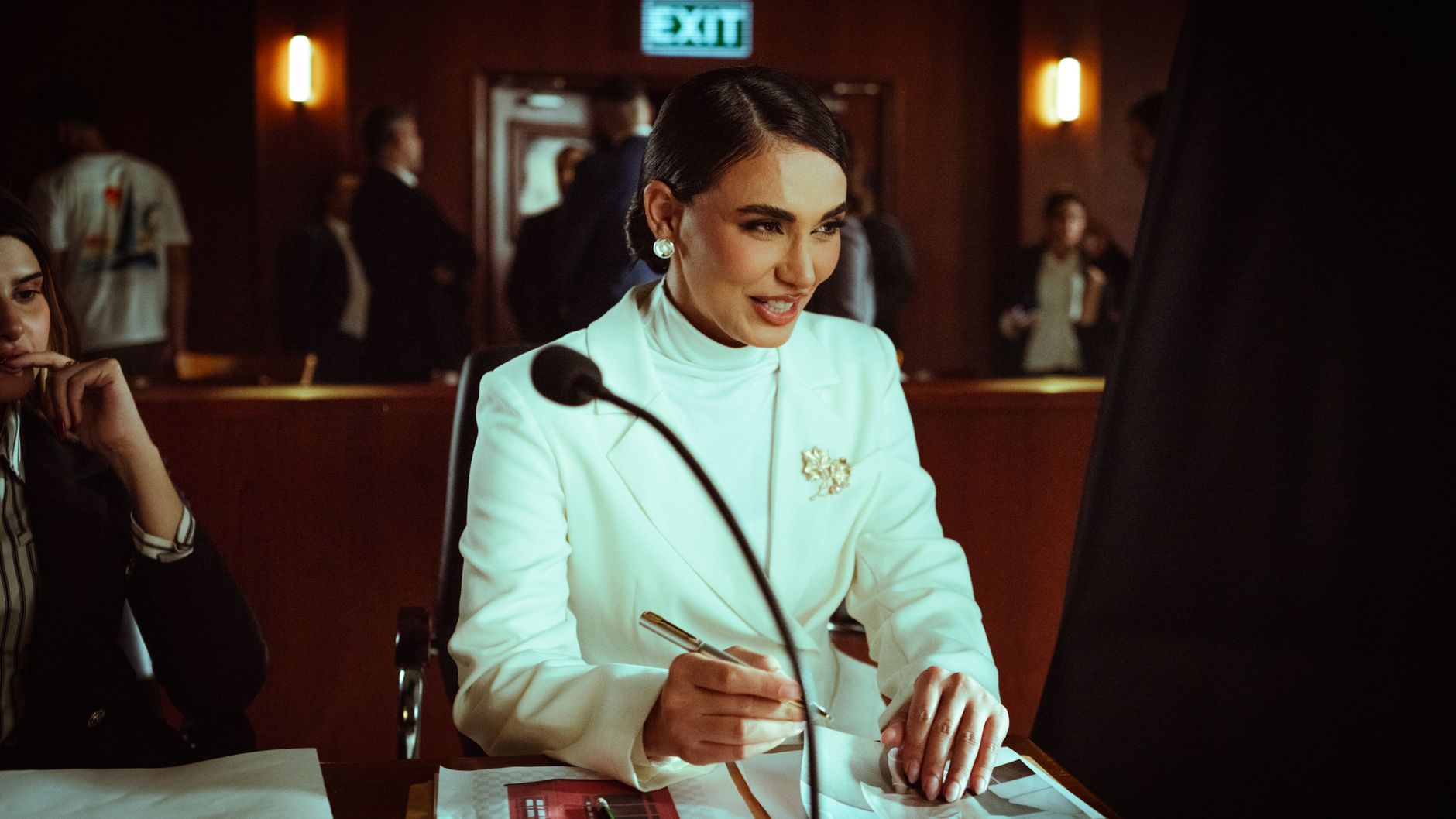
Gal Gadot is set to work on developing a feature film adaptation of Don’t Feed the Lion, a middle-grade book by journalists Bianna Golodryga and Yonit Levi. Through Pilot Wave Motion Pictures, the production company she co-founded with her husband Jaron Varsano, the actress will executive produce the project and is also being considered for a role. At this stage, however, there is no official confirmation regarding her on-screen involvement, nor have any announcements been made concerning a director, screenwriter, cast, production schedule, or distribution plans.
The project brings together Fox Entertainment Studios, Pilot Wave, and Moriah Media, the storytelling division of the Simon Wiesenthal Center. The companies have finalized an agreement to option the rights, develop, and produce a film based on the novel, published in 2025 by Arcadia Children’s Books. This remains an early stage in the production pipeline: optioning and development ensure the story progresses creatively, but do not mean filming is already funded or imminent.
The news carries a significance that goes beyond just another book adaptation announcement. Fox and its partners have selected a story aimed at preteens and teenagers that explicitly tackles contemporary antisemitism—including its spread across social networks—and grounds it in the setting where its fallout is felt every day: a school.
A school story sparked by a viral post
At the heart of Don’t Feed the Lion is Theo Kaplan, a 13-year-old soccer co-captain, alongside his younger sister Annie and their schoolmate Gabe. The children's world is upended when a sports star Theo idolizes posts an antisemitic message online that gains widespread traction. That stance does not remain confined to the screen: hostile attitudes, prejudice, and peer pressure quickly spill over into their Chicago middle school.
The book therefore follows the three young characters as they try to recognize what is happening, figure out who they can ally with, and decide when to step in. Around them is also the family dimension, represented by Shabbat dinners with Theo and Annie's immigrant grandparents. Jewish identity is not treated merely as background context, but as a tangible part of the protagonists' lives, put to the test by a climate of hostility that originates from digital content and translates into social relationships.
The title comes from an expression the grandfather shares with the children: don't feed the lion—meaning, do not allow fear, panic, and hatred more room to grow. In the adaptation, the meaning of this metaphor will have to grapple with one of the primary challenges of a film aimed at a young audience: conveying the real harm caused by hate speech without turning the story into an abstract lecture or a didactic production.
Why Fox, Gadot, and Moriah Media are coming together on this material
Golodryga and Levi come to the project from television and journalism rather than entertainment fiction. Golodryga is an Emmy-winning American journalist, former CNN anchor, and global affairs analyst; Levi has anchored Israel's flagship Channel 12 prime-time newscast for over twenty years and co-hosts the international podcast Unholy: Two Jews on the News with Golodryga. The two authors also conceived the book in response to questions asked by their children and the scarcity of fiction for younger audiences that directly addresses antisemitism.
The presence of Moriah Media highlights the intention to preserve the work's historical and civic core. The division is part of the Simon Wiesenthal Center, an institution known for its work in Holocaust remembrance, combating antisemitism, and human rights. Its involvement brings a partner with an openly educational and cultural mission to the project; at the same time, the production will need to find a form capable of speaking to viewers who may be unfamiliar with the story's historical or religious references.
For Gadot and Varsano, the connection is personal as well as professional. Their Pilot Wave Motion Pictures chose to board the creative package at a very early stage, when an actor-producer can influence talent recruitment, tonal choices, and the adaptation's structure. Gadot is associated with wide-release franchises like Wonder Woman and streaming titles such as Red Notice; the possibility of her starring in the film could help the project secure industry and commercial traction, but it does not yet define either the budget scale or the ultimate target audience.
Fox Entertainment Studios, led by President Fernando Szew, provides a production infrastructure that has invested in recent years in producing and building multi-platform intellectual property. In this case, the material's value does not rely on a brand already familiar to the general public, but rather on the combination of subject matter, an accessible adolescent perspective, and the figures involved in development. It is a different gamble from adapting a bestselling saga: the book is recent, and the film will have to build its own recognition from scratch.
The adaptation will have to avoid oversimplification
Bringing a story of bullying and antisemitic hate linked to online circulation to the screen carries a specific risk. The triggering incident—a post by a sports celebrity—is straightforward to understand; far less simple is showing how top-down legitimation alters the behavior of peers, teachers, friends, and families. The strength of the work will likely depend on its ability to depict that chain of consequences without reducing characters to didactic functions.
The middle-grade segment also requires a carefully calibrated tone. Don’t Feed the Lion speaks to young people who are the same age as the protagonists, but any eventual film will most likely count parents, educators, and adult viewers among its audience as well. The partners' stated goal is to open a conversation across generations. To succeed, the film will have to avoid both sugarcoating and pursuing shock value that would distort the youth perspective.
No details have been shared regarding the format of the work: it is not known whether Fox envisions a traditional theatrical release, a streaming rollout, or a combination of the two, nor whether the production will be conceived as a standalone film or as a launchpad for further developments. These decisions will come after the screenwriting and project packaging phase. For now, the tangible takeaway is the start of a collaboration that brings a theme rarely centered in young adult entertainment into a top-tier Hollywood pipeline.
The next step will be the announcement of the creative leads and, above all, a clearer definition of Gadot’s involvement. Until then, Don’t Feed the Lion remains a film in development: a project with high-profile partners and a clear thematic mandate, but still far from the stage where a final cast, principal photography, and release date can be evaluated.