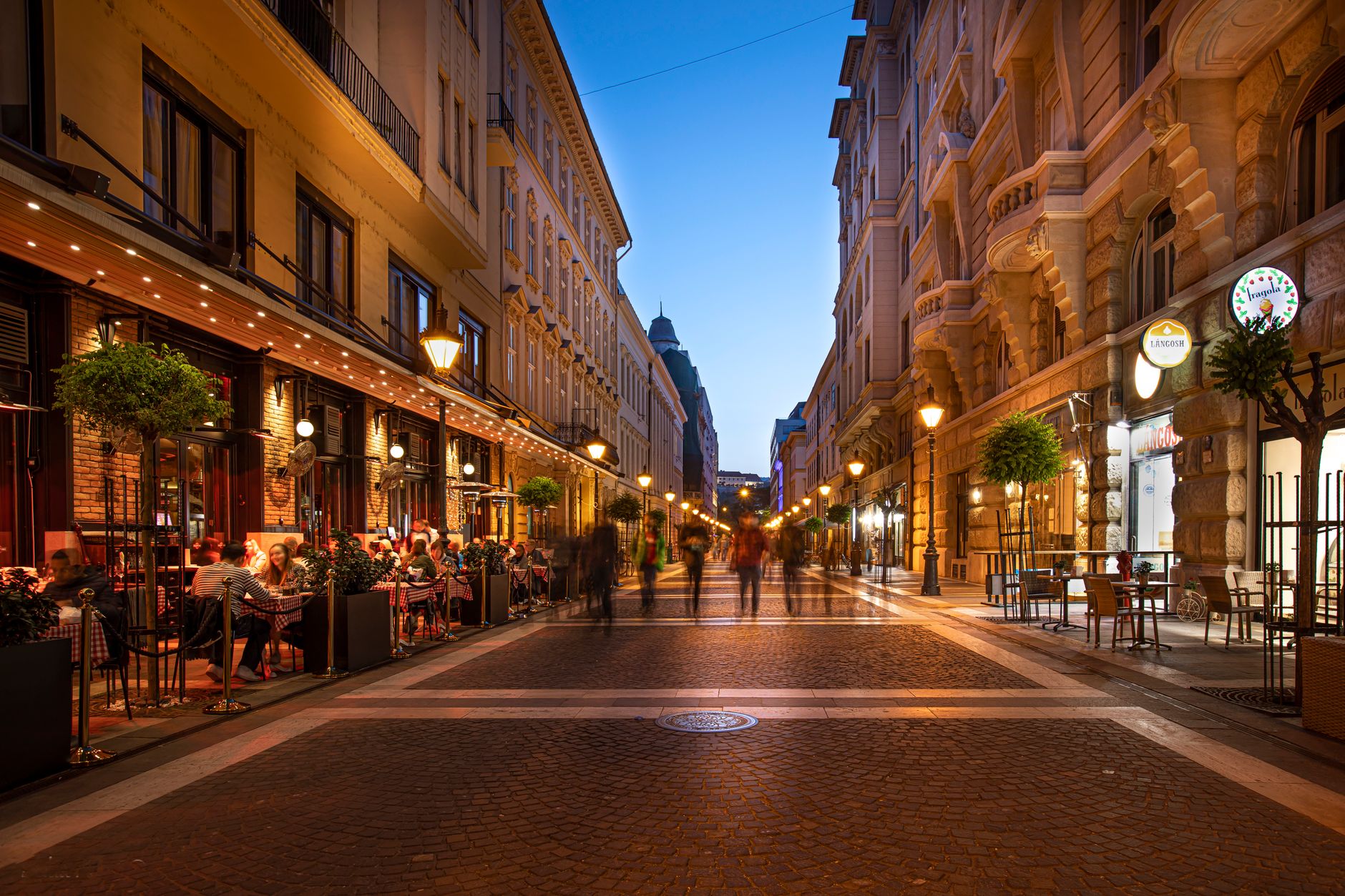
A city at eleven at night is not simply the darker version of the city at eleven in the morning. People, commutes, open shops, transit frequency, the perception of distances, and even the meaning of an empty street all change. It is almost a different infrastructure using the same buildings.
This is why nighttime is an excellent test of urban quality. During the day, many vulnerabilities are offset by the volume of activity and people. After sunset, they become more apparent.
Night puts transportation to the test
A mobility system can appear comprehensive during peak hours and suddenly become fragile in the evening. Lower frequencies and lines that end early alter the city's effective reach for those working in restaurants, hospitals, logistics, security, entertainment, or many other sectors that do not follow standard office hours.
The nighttime city is often portrayed solely through the lens of leisure. In reality, it is also a city of work. The quality of evening transit dictates how expensive, complicated, or safe getting back home is.
Lighting matters, but it is not enough
When discussing nighttime safety, the most immediate response is to add more light. Good lighting is essential for identifying paths, obstacles, and people, but on its own, it does not create a lived-in space.
What lines the street also matters: entrances, businesses, stops, homes, open spaces. A street can be perfectly lit and still feel isolated. Conversely, a route with diverse activity and a continuity of functions tends to be more legible.
Urban design must also avoid another mistake: confusing more light with better light. Intensity, uniformity, glare, and relationship with the environment all produce different effects. The urban night needs visibility, not necessarily to be turned into day.
At night, distance becomes psychological
A stop that is a seven-minute walk away may feel close during the day and far at night if the route crosses deserted or poorly legible stretches. This is one of the reasons mobility cannot be assessed solely through theoretical travel times.
OMS points out that urban design and transport systems influence health, safety, and access to opportunity. During night-time hours, this relationship becomes even more evident as available alternatives dwindle.
Night reveals who the city was designed for
Young people returning from a venue, workers ending a shift, women alone, tourists unfamiliar with the neighbourhood, elderly people returning from a visit: the same street is perceived in different ways. A genuinely inclusive city cannot take as its default user only an adult in a car, capable of navigating and without specific vulnerabilities.
Night brings these differences to light. A long pedestrian crossing, a transit shelter without seating, a transfer between two lines, or a hundred metres without a sidewalk can weigh far more heavily when there are few people around and less margin to find an alternative.
Nightlife and the right to rest are not separate issues
The night-time city also concentrates one of the most difficult urban conflicts: between economic activity, social life, and the right to rest. Reducing it to “young people versus residents” accomplishes little. The issue involves spatial distribution, night transit, flow management, opening hours, acoustics, and the ability to prevent all demand from concentrating on just a few streets.
A city with more venues and options can better distribute nightlife. Conversely, a city with few hubs tends to generate congestion, noise, and more intense conflict in the very neighbourhoods that work best as evening destinations.
The city at night is a whole city
UN-Habitat emphasizes the role of public space in connecting people, activities, and opportunities. This function does not end at sunset. Parks, squares, transit stops, and streets must adapt their behaviour across different hours without ceasing to be accessible.
Observing a city at night therefore means asking very practical questions: Can people get home without a car? Are routes easy to navigate? Is there a place to wait? Do those working late have alternatives? Is social life distributed or concentrated? Can someone walk through a neighbourhood without feeling stranded?
The answers perhaps reveal more than just nightlife. They show how effectively the city manages to function around the clock for people with different schedules and lives.


