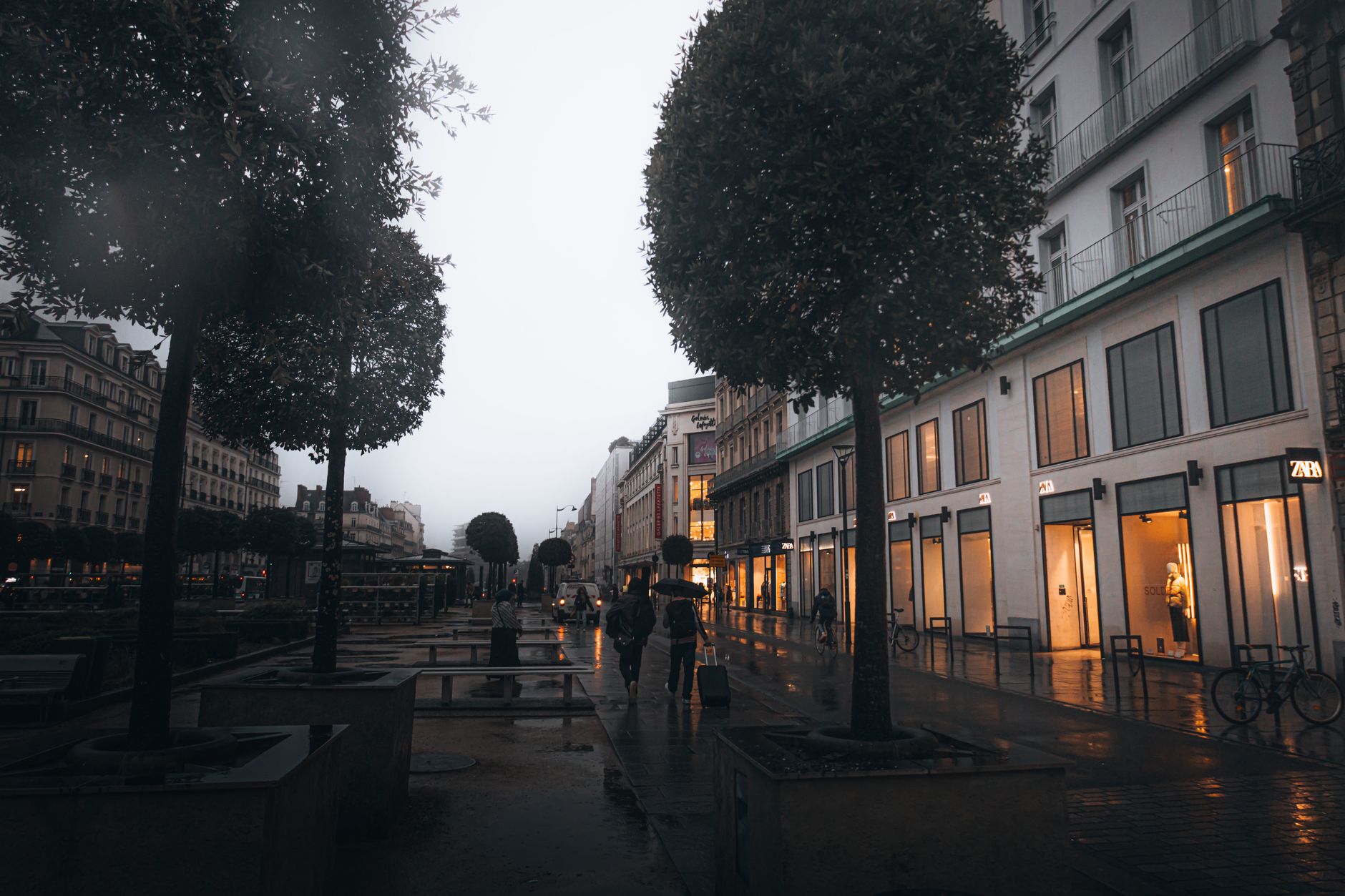
A city seen from a car window and a city crossed on foot can seem like two different places. By car, you recognize thoroughfares, intersections, and destinations. Walking, you notice shop thresholds, the quality of sidewalks, benches, shade, noise, and people. The lower speed does not just change the way we travel: it changes what we are able to see.
This is why walkability should not be treated as an aesthetic detail or a concession to non-drivers. It is a fundamental part of urban infrastructure and affects health, autonomy, access to services, and the quality of public space.
Walking is the primary transport network
Even those who use trains, the metro, buses, or cars almost always complete at least part of their trip on foot. Every stop has a pedestrian catchment area; every parking space ends with a walk; every business depends on a final stretch traveled without a vehicle. If that stretch is inconvenient or hazardous, the entire system suffers.
The Organizzazione mondiale della sanità emphasizes that the way we design cities directly influences physical activity and health. Neighborhoods that make walking or cycling easier turn physical movement from a scheduled activity into a natural part of daily life.
The problem is not distance, but friction
Five hundred meters can be a pleasant stroll or a hostile route. It depends on the number of crossings, the speed of car traffic, sidewalk continuity, the presence of trees and shade, places to sit, slopes, and the quality of the paving.
The very same street changes even more for anyone pushing a stroller, using a wheelchair, dealing with mobility impairments, or simply unable to navigate steps and obstacles. Discussing a “walkable city” without addressing accessibility therefore means telling only half the story.
Walking builds a more legible city
On foot, we learn where we are. We build a mental map formed not just of street names, but of reference points: a bakery, a facade, a tree, a public square. This makes the neighborhood more readable and enhances the sense of familiarity.
Then there is a social impact. At pedestrian speed, opportunities to recognize people, observe what is happening, and decide to stop increase. This does not mean romanticizing the street as an inherently communal space, but acknowledging that certain forms of social connection are only possible if the space allows people to linger, rather than merely pass through.
Health and air quality stem from the same choice
According to the OMS, poor urban transport planning can simultaneously contribute to pollution, accidents, and insufficient physical activity. This is one reason why active mobility yields overlapping benefits: every short trip that can be safely made on foot is not just an alternative way of traveling, but an opportunity for movement integrated into daily life.
Green and open spaces also play a complementary role. UN-Habitat highlights their contribution to physical health, mental well-being, and social cohesion. A pleasant route does not simply serve to get there faster: it makes it more likely that someone will actually choose to walk.
Walkability cannot be measured by a single pedestrian zone
Pedestrianizing a square can radically transform a space, but a walkable city requires continuity. If a pleasant area is surrounded by streets that are difficult to cross, it remains an island. The real leap occurs when neighborhoods, transit stops, schools, parks, and businesses are connected by an intuitive network.
It is the difference between having a few places where you can walk and being able to use walking as a mode of transportation.
A pedestrian-scale city also changes our time
Walking is often described as slower. Yet the comparison is less obvious over short distances, especially once searching for parking, traffic, and detours are factored into driving time. Furthermore, time spent on foot is not necessarily wasted time: it can be physical exercise, observation, a phone call, an encounter, or decompression between two parts of the day.
The quality of a city is also reflected in this: whether a ten-minute journey feels like a problem to solve or a normal part of life. Making walking simple, safe, and pleasant does not mean rolling back mobility. It means better designing its most universal form.


