The close of October brings together two tensions that typically run on separate tracks: a reassessment of expectations for major publicly traded tech companies and an unprecedented security incident in the cryptocurrency market. Nasdaq futures point to another negative day for the sector following quarterly earnings from Amazon and Intel, while Binance announced that a security breach compromised $6.3 billion in assets. Bitcoin dropped below $78,000 amid the climate of uncertainty following the breach.
The two events do not share the same origin and should not be read as a single development. The sell-off in tech stocks is primarily tied to investor reactions to company earnings and forward-looking guidance. The attack on Binance, by contrast, brings the operational security of crypto intermediaries back into focus. In a session already marked by caution, however, their overlap adds pressure on assets perceived as having higher risk exposure.
Binance and the industry's largest incident to date
Binance, the world's largest cryptocurrency exchange, disclosed a security incident in the early hours of the day with an estimated impact of $6.3 billion. By scale, the incident surpasses the previous record held by the 2025 ByBit hack, in which approximately $1.5 billion was stolen. At the time, the FBI identified North Korea as responsible; for the incident involving Binance, no official attribution has yet been made.
Richard Teng, co-CEO of Binance, explained on X that initial findings point to a DevOps engineer's laptop as the possible source of the compromise. It is an important yet preliminary detail: on its own, it neither establishes the full dynamics of the intrusion nor clarifies which controls were bypassed. Teng assured users that Binance will fully cover the losses and that customer funds are safe.
The initial response also involved other ecosystem operators. Binance froze $3 billion in assets linked to the attack; Circle blocked $800 million and Tether $1.56 billion. Freezing funds can restrict the movement of a portion of the identified sums, but it does not automatically equate to the final recovery of the assets, nor does it resolve questions about how much remains under the attackers' control.
According to CNBC, the hackers reportedly tested Binance's code and prepared the operation before taking action. Speculation has already circulated around the case regarding the involvement of a state-sponsored actor, with attention focused in particular on North Korea. At present, however, this remains speculation: Binance has not attributed the attack to specific individuals, groups, or governments.
Why a compromised laptop can become a market problem
The initial explanation provided by Binance highlights an aspect often less visible than wallets, blockchains, and smart contracts: the security of a platform also depends on the tools used by the people who run it. A device associated with a DevOps role can be linked to the processes used to deploy software, manage infrastructure, and administer critical environments. For this very reason, the investigation will need to determine what privileges were available on the device, what operations were authorized, and how the attackers were able to exploit them.
For users, in the immediate term, two factors matter most: the exchange's ability to honor its commitment to refunds, and transparency regarding frozen assets, recoverable amounts, and the procedures that will be adopted after the incident. For the market, the case is also a test of how quickly exchanges and stablecoin issuers can coordinate when funds move across multiple platforms.
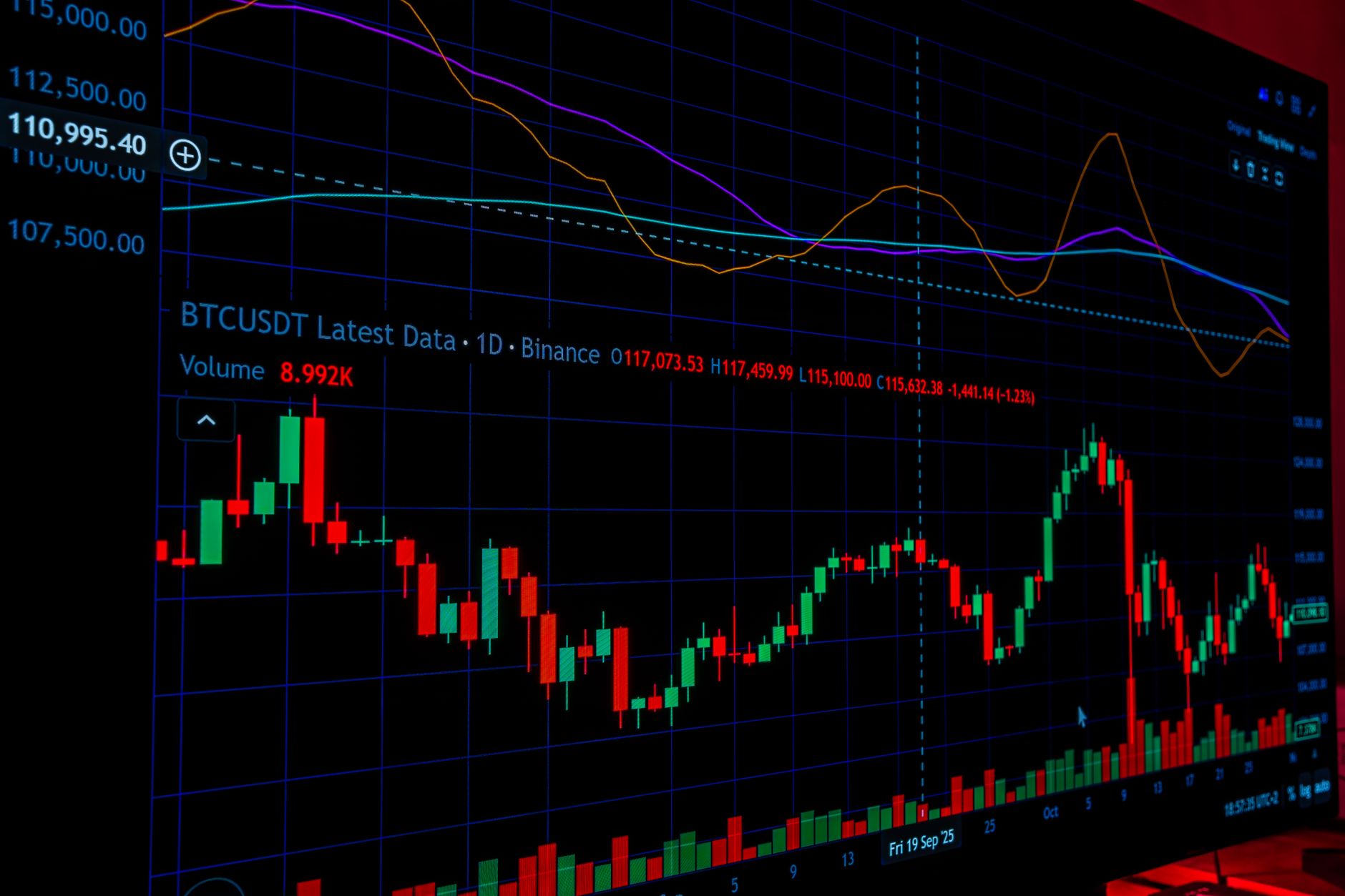
Bitcoin's drop below the $78,000 mark signals that the news had an immediate effect on market sentiment. However, it does not allow for a precise separation between the impact of the hack and that of the broader risk-off move affecting tech stocks. Cryptocurrencies are reacting to specific uncertainty surrounding Binance, but they are doing so on a day when the market is already reassessing tech valuations and growth prospects.
Amazon and Intel worsen the picture for the Nasdaq
Even before the crypto alert, corporate earnings had weighed on the trading session. Amazon missed expectations on both earnings per share and revenue. The figure overshadowed AWS's performance, which posted its fastest growth in five years. In premarket trading, the stock was down over 7%, a reaction that highlights how the market is weighing the group's overall financial profile rather than cloud performance alone.
Among the factors monitored by investors is capital expenditure. Bill Baruch of Blue Line Capital described it as the most critical issue for Amazon, while noting the presence of technical support for the stock. Tom Forte of Maxim Group pointed instead to the challenging consumer environment, an element to watch heading into the fourth quarter. These are market assessments, not guidance on future results, but they help explain why a solid acceleration at AWS was not enough to offset disappointments across the headline quarterly numbers.
The reaction was sharper for Intel. The chipmaker issued a weaker fourth-quarter forecast and warned that demand in the PC market remains fragile. In premarket trading, shares tumbled 25%. David Zisner, the company's CFO, indicated that the PC slowdown could continue at least through the first half of next year.
The revision also carries weight because Intel entered earnings after a strong run: prior to the earnings release, the stock had gained roughly 150% year-to-date, despite shedding around 23% in October amid concerns over the scale of AI-related investments. Guidance on the PC market therefore provides investors with concrete data against which to recalibrate expectations that had already grown more volatile.
The next tests
Over the coming hours, attention will be split across two fronts. On the Binance side, verifiable technical details will be needed regarding the attack chain, the amount actually recoverable, and the timeline for promised reimbursements. It will be equally crucial to see whether sufficient evidence emerges for formal attribution. On the equity front, the market will have to gauge whether the sell-off in Amazon and Intel remains confined to the two earnings reports or becomes a broader warning sign for the Nasdaq.
The link between the two dossiers is therefore primarily financial: when lower-than-expected results and a major cyber incident hit at the same time, risk appetite can deteriorate rapidly. But the required responses are different. From tech companies, the market is demanding visibility into revenue, demand, and investments; Binance is being asked to demonstrate that the damage can be contained, reimbursed, and clearly analyzed.