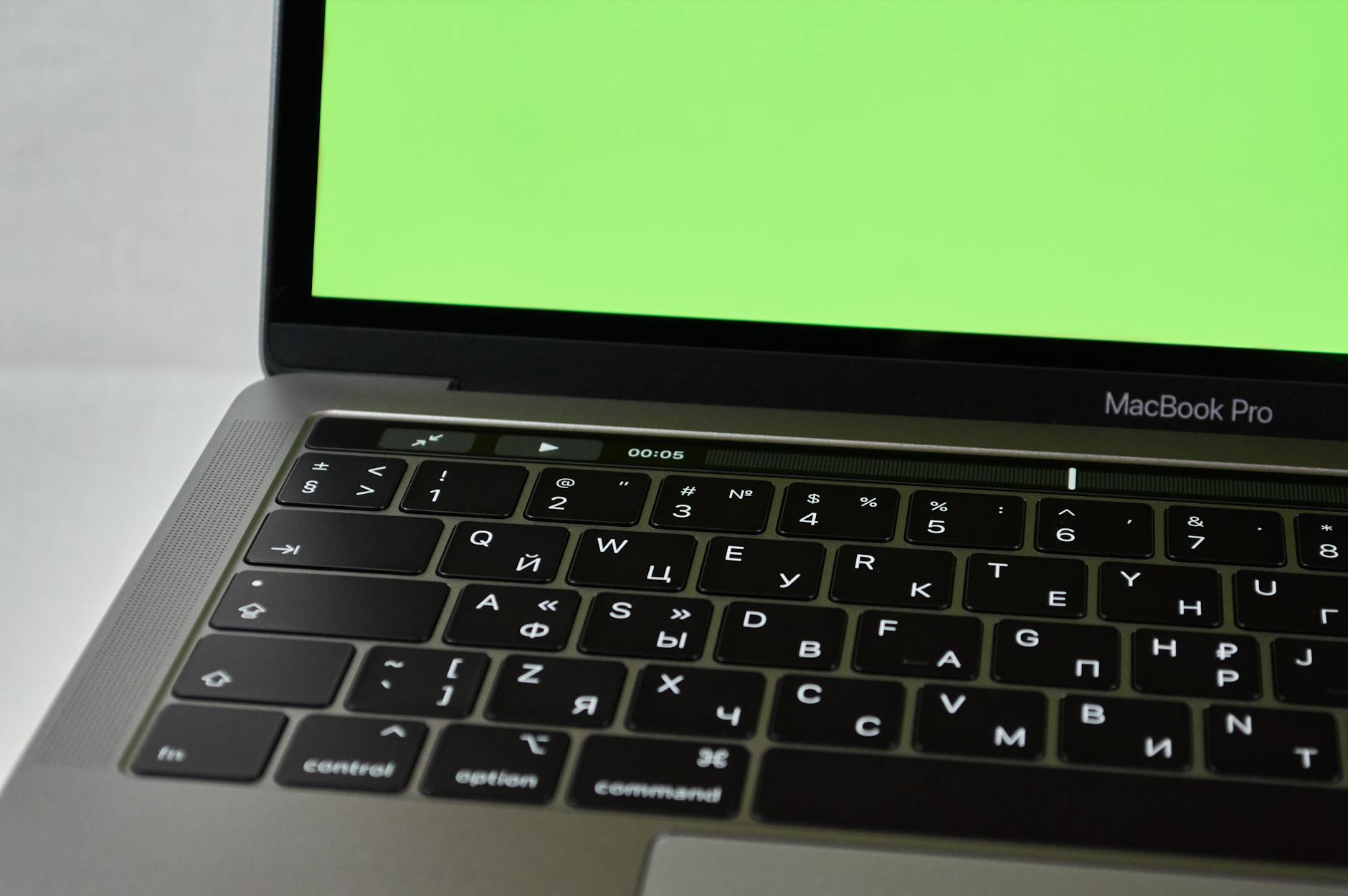
Apple has finally brought a touchscreen to the MacBook Pro, bringing an end to one of the longest and most contradictory waits in the recent history of the Mac lineup. For years, the company defended the idea that laptops should remain distinct from the iPad: keyboard, trackpad, and mouse on one side; direct on-screen interaction on the other. The new MacBook Pro with PROLED XDR Display crosses that boundary, but does so without altering macOS or redefining the essence of the product.
This is the key takeaway emerging from the early impressions published following the announcement: the touchscreen does not appear to be the center of a new user philosophy, but rather an added capability on an otherwise familiar MacBook Pro. Users can touch the screen, scroll through a page, select an item, or interact directly with what appears on the display. Yet the core design remains that of a traditional Apple notebook, built around the keyboard and trackpad.
In other words, Apple did not opt for a convertible form factor, did not merge the Mac and the iPad, and did not frame touch as the reason to upgrade from an existing computer. It integrated a long-requested feature into a professional machine, aiming to make it coexist with workflow habits that Mac users have established over decades.
A long-awaited shift, but deliberately cautious
The update is also significant for what it represents. Under the tenure of its last two chief executive officers, Apple repeatedly voiced skepticism about the concept of using a laptop by touching its display. The rationale was not merely technical: there was a firm belief that repeatedly reaching for the screen causes fatigue, and that a vertical surface is not the natural home for primary controls.
Meanwhile, the Windows laptop market normalized touch panels, foldables, and hybrid designs years ago. Apple, on the other hand, developed iPadOS as an environment built for touch, keeping macOS anchored to traditional pointing devices. The arrival of touch on the MacBook Pro does not automatically erase that divide, but it proves the company now views direct touch gestures as viable without compromising the Mac's identity.
The decision to limit the debut to the MacBook Pro is equally significant. It is not an indiscriminate rollout across the entire lineup, nor is it, at least for now, the promise of a touchscreen Mac at every price point. Apple is starting with the laptop aimed at professionals and creatives—users who spend hours in front of the screen and can benefit from quick interactions with windows, content, and visual tools, all while maintaining a traditional workstation setup.
The OLED display is the most tangible upgrade
While the touchscreen might be the headline feature of the announcement, the OLED panel could be the upgrade with the greatest impact on day-to-day use. Apple calls it the PROLED XDR Display, a moniker that pairs the new commercial name with the established XDR acronym used for its high-end displays. Branding aside, initial impressions describe deeper blacks, very high contrast, rich colors, and impressive brightness.
The natural comparison is with the current Mini LED MacBook Pro models, which remain top-tier displays. However, OLED brings different characteristics to the table: each pixel can turn off completely, offering visible advantages, especially in dark areas of an image and high-contrast content. For those working on photos, videos, or graphics—as well as anyone watching movies and series—the panel's quality may be far more immediately noticeable than touch support.
Apple positions the display as suitable for reference workloads and highlights support for Apple CMF 2026 color modes, a feature targeted specifically at workflows where color management is critical. These are claims that will need to be evaluated through extensive testing and direct comparisons, but they point to a clear priority: touch does not come at the expense of the MacBook Pro's professional profile. In fact, it is paired with a panel upgrade designed to reinforce it.
Early impressions also point to a thinner and lighter laptop. Here too, the true extent of this upgrade will depend on long-term testing, battery life, and available configurations. But the direction is clear: Apple wants to present the touchscreen model as the evolution of a MacBook Pro, not as a standalone experiment aimed at users looking for a 2-in-1.
An extra control method, not a requirement
Perhaps the detail most consistent with this approach is that the touch function can be disabled. Apple is therefore not imposing new behavior on those who buy the laptop and prefer to keep working exclusively with a keyboard and trackpad. It is a practical option for anyone concerned about accidental touches, muscle memory conditioned by other devices, or who simply does not find the new input method useful.
This option speaks volumes about the nature of the product. The touchscreen does not replace the tools that have defined the Mac experience, nor does it seem destined to change how macOS organizes windows, menus, and applications. It can serve as a complement: a quick gesture for a selection, more immediate scrolling, or direct control when a hand is already near the display. Its value will depend heavily on individual software and how developers choose to make these gestures useful without distorting desktop interfaces.
It is a delicate balance. A poorly integrated touch experience risks remaining an occasional convenience; an overly invasive one could create inconsistencies between MacBook Pro models of different generations or push apps toward solutions ill-suited for mice and trackpads. Apple appears to have initially chosen the former path: giving users freedom and observing how the new input method is adopted.
The commercial bet starts with a narrow segment
According to a forecast reported by MacRumors, Apple could ship around 1.5 million touchscreen MacBook Pro units in 2027. This is an estimate, not data released by the company, and should be read with the product's premium positioning in mind. Still, it indicates that the first year of the new configuration could reach meaningful scale without coinciding with a full conversion of the MacBook lineup.
The decisive factor will be whether touch remains a hallmark of the OLED Pro models or gradually becomes part of the broader offering. For now, there is no evidence pointing to an answer. Neither an expansion of the feature to MacBook Air nor a radical overhaul of macOS built around fingers has been clarified.
For Apple, then, the debut is more of a course correction than a revolution. After years spent keeping the language of the tablet and that of the computer separate, Cupertino admits that the touchscreen can also have a place on the laptop. But it does so on its own terms: the MacBook Pro remains a MacBook Pro, with a much more ambitious OLED display and a new, optional way of interacting with what is on the screen.