Some festivals are created to fill a place in the calendar. Others, over time, end up creating a space of their own. Alice nella Città belongs to the latter category. Founded in Rome in 2003 and, since 2006, developed as an autonomous and parallel section of the Rome Film Fest, it has spent more than twenty years turning a simple intuition — taking young audiences seriously — into a recognizable cultural project that brings together auteur cinema, first features, major premieres, schools, training, emerging talent and the audiovisual industry.
This is where Alice's strength lies. It has never treated children and teenagers as a secondary audience to be instructed from above or entertained with content merely considered “suitable” for them. Instead, it has treated them as real viewers, with their own tastes, fears, desires and critical judgment. That distinction may seem subtle, but it explains much of the festival’s success. As the relationship between cinema and younger generations has been transformed by streaming platforms, social media, fragmented attention and changing theatrical habits, Alice has kept defending one stubborn idea: cinema as a collective experience, as discovery, and as a way of learning to see the world through other people’s stories.
From the 2003 beginnings to an increasingly independent identity
Alice nella Città was born in 2003. Three years later it entered the orbit of the Rome Film Fest as an autonomous and parallel section, while preserving its own identity, direction and editorial line. Artistic directors Fabia Bettini and Gianluca Giannelli have built a festival that has grown without abandoning its original mission: telling the stories of younger generations, discovering talent, shining a light on first works and creating direct contact between films, filmmakers and audiences.
The story is especially interesting because it developed almost against the current. In contemporary cinema, the word “young” is often reduced to a marketing category. Alice chose instead to use it as an editorial lens. That does not mean programming only films for teenagers. It means looking for works that capture the moment in which a point of view is formed: coming of age, family relationships, identity, inequality, collective fears, love, friendship, the desire for freedom and the difficulty of finding one’s place in the world. In that sense, Alice has done something valuable: it has shown that speaking to young people often means speaking about the present in its most vivid form.
A vocation for discovery before celebration
In a festival landscape inevitably measured also by red carpets and star power, Alice nella Città has kept discovery at the center. First features, short films, emerging talents and still little-known directors are not side dishes; they are among the core elements of the event. This is where the festival has built its credibility: on the idea that prestige comes not only from bringing an international star to Rome, but also from identifying today who may become one of tomorrow’s leading voices.
This approach has allowed Alice to grow along two parallel tracks. On one side, research and discovery through competitions, debut sections and a strong focus on short cinema. On the other, events capable of attracting broad audiences, making the festival popular without making it superficial. Over the years, Alice has hosted or involved major figures from international cinema and culture, building a reputation that has allowed it to engage with filmmakers, actors, producers and distributors well beyond the boundaries of so-called “youth cinema.”
The twentieth anniversary and the passage into maturity
The twentieth edition in 2022 was a symbolic milestone. The program brought together, among others, Russell Crowe, Mahmood, Emma Marrone, Casadilego and Paul Mescal, clearly showing Alice’s ability to cross different languages and speak to different audiences. Twenty years are not just an anniversary: for a festival they mean surviving fashions, industrial changes, economic crises, technological transformations and even a pandemic while preserving a reason to exist.
For Alice, that reason has remained easy to recognize: opening doors. Doors to cinema for younger audiences; doors to the industry for new talent; doors to the city for a less self-contained idea of culture. From that point onward, growth became increasingly visible not only in reputation but also in scale and structure.
2023: more than 155,000 attendances and a festival inside the industry
The 2023 edition marked one of the clearest leaps forward. Alice nella Città recorded more than 155,000 attendances among audiences and accredited professionals, with growth compared with the previous year and a clear increase in ticketing. These figures describe a transformation: no longer only a festival respected for the quality of its choices, but an event capable of generating major participation throughout the city.
That growth coincided with a stronger relationship with the audiovisual industry. Alice expanded networking opportunities, co-production activities, short-film initiatives and professional meetings. The Short Film Days at Palazzo delle Esposizioni gave a more structured home to short-form cinema, still one of the main laboratories of experimentation and one of the most accessible entry points for directors, screenwriters, actors and producers at the beginning of their careers.
At the same time, initiatives such as WomenLands showed another characteristic of the festival: its ability to use cinema as a starting point for broader conversations about society, rights, inclusion and the role of women. Alice is therefore not merely a sequence of screenings, but an ecosystem of encounters and projects linking imagination, education and citizenship.
When major stars become tools for learning
One of Alice nella Città’s most significant achievements has been its way of using high-profile guests not only as spectacle, but as opportunities for exchange. The festival has gradually built masterclasses, meetings with juries, conversations with students and events designed to bring those who watch cinema closer to those who make it.
In 2024, the program crossed paths with figures such as Francis Ford Coppola, Ridley Scott and Steve McQueen. Matt Dillon returned to Alice as president of the Onde Corte jury, while an event dedicated to Andrea Bocelli combined the world premiere of a concert film with a meeting involving young people from music and film schools. It is an intelligent way of understanding prestige: a star also matters for what they can leave behind for those who are just beginning.
Short films, new professions and the link with the market
The growth of the Short Film Days, later brought into closer relationship with MIA – International Audiovisual Market, perhaps best describes Alice’s evolution. Short film is not treated as a minor format, but as a creative and industrial field where new professions are formed and new languages are tested. Bringing emerging filmmakers, producers, broadcasters, institutions and professionals around the same table means turning a festival into cultural infrastructure.
This is the difference between showing a film and helping create the conditions in which other films can be made. Over the years Alice has increasingly chosen the second path without abandoning the first. This balance between audiences and industry, emotion and planning, red carpet and behind-the-scenes work has become one of the festival’s most mature traits.
A festival that leaves the theater and moves through Rome
The name “Alice nella Città” has always contained a geographical promise as much as a narrative one. The festival has tried not to remain locked inside a single venue, but to move through Rome. Auditorium Parco della Musica, Auditorium della Conciliazione, Palazzo delle Esposizioni and other locations have created a distributed map of the event.
This vocation found one of its most beautiful expressions in the Puntasacra Film Fest, created through the work of Alice nella Città together with director Francesca Mazzoleni and brought to the Idroscalo area of Ostia. Here cinema becomes a cultural presence in a territory often perceived as peripheral to Rome’s major event circuits. The idea is simple and powerful: if cinema wants to build community, it must also go where communities live. It cannot merely wait for audiences to reach traditional cultural venues; culture must also reach the places too often excluded from them.
By 2025, the Puntasacra Film Fest had reached its fourth edition, confirming that Alice’s work does not end with the autumn festival. It has become a broader set of year-round activities that strengthen the relationship between cinema and the city.
2025 and the move toward an even more independent festival
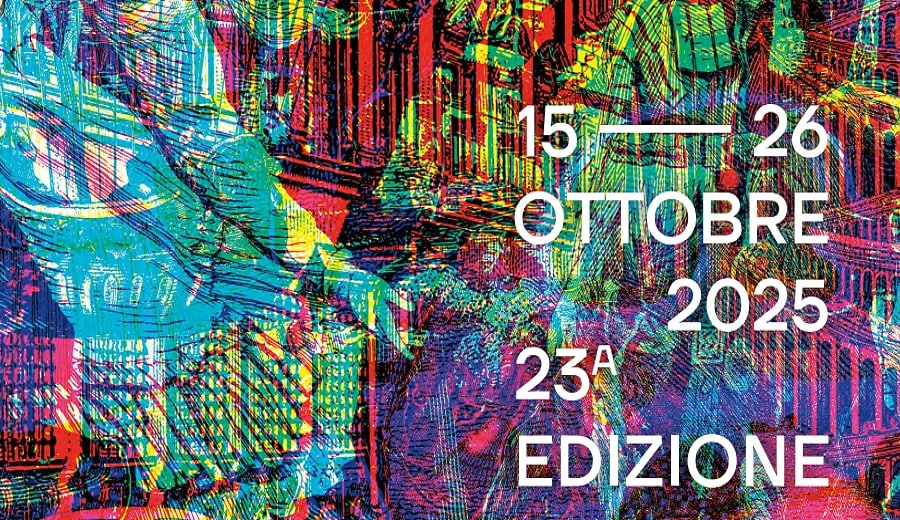
The twenty-third edition represented another decisive step. Alice presented itself with an even stronger identity in relation to the Rome Film Fest, within a framework of new agreements and growing organizational independence. It was the sign of a maturity earned over time: when a project born as a parallel section becomes a cultural brand in its own right, it means it has accumulated enough audience, reputation and organizational capacity to stand on its own.
The 2025 program reflected this dimension, combining an international competition, Italian panorama, television series, special screenings, restorations, short films and a large number of meetings. Appearances and events involving figures such as Robert De Niro and a masterclass linked to Daniel Day-Lewis and Ronan Day-Lewis further expanded the festival’s profile. But once again, the most important element was not merely the guest list.
More than ten thousand students: the figure that best explains Alice
In 2025, more than ten thousand students were involved in screenings and educational activities connected with Alice nella Città. Over nine thousand took part in screenings open to schools, involving 144 schools and 441 classes, while more than one thousand young people participated in afternoon educational activities. These numbers explain better than any red carpet why the festival has built such a strong identity.
Taking a class to the cinema does not simply mean filling a theater. It means giving girls and boys another language through which to interpret the world; asking them to remain with a story long enough to understand it; inviting them to discuss, judge and choose. Young juries, meetings with filmmakers and educational programs turn spectators into participants. This is probably the most coherent and valuable part of the Alice project.
An idea of audience that anticipated many of cinema’s current questions
For years, the film industry has asked how to bring younger audiences back into theaters. Alice nella Città has chosen a less abstract method: actually involving them in the cultural process. Not talking “about young people” without young people, but creating situations in which they can watch, evaluate, discuss and meet those who make films. It is a lesson that extends beyond the festival.
At a time when streaming platforms know consumption data in extraordinary detail but rarely create physical communities, a festival can still offer what an algorithm cannot replace: the surprise of a full theater, the conversation after a screening, the chance to discover a film that would never have appeared on one’s personalized homepage, and the excitement of asking a director or actor a question immediately after the credits.
Rome as a laboratory, not just a backdrop
Alice has also contributed to a different idea of Rome. The city is certainly the red carpet, the Auditorium, the major international guests and its unmatched cinematic history. But it is also schools, Ostia, associations, young creators, local theaters, training spaces and communities that live outside the city center. The festival has tried to hold these worlds together, making Rome not simply the backdrop of the event but part of the project itself.
This territorial dimension is one of the reasons Alice has been able to grow without appearing artificial. Its expansion has not been merely quantitative. There are more events, but above all there is a wider network of relationships: with institutions, schools, industry, professionals, other festivals and communities across the city.
The twenty-fourth edition and a story that continues
In 2026, Alice nella Città reaches its twenty-fourth edition. The official festival website has already opened a new phase of accreditation and film submissions, confirming Rome as the home of the event for another autumn. At this point in its history, Alice no longer needs to prove that it has grown. Its challenge is to keep using that growth to do what made it recognizable from the beginning: searching for new points of view.
It is easy to praise a festival for the stars it brings. It is more difficult — and more meaningful — to recognize the value of what it builds between one edition and the next. Alice nella Città has worked precisely in this field: image education, access to cinema, scouting, support for first features, short films, training, work in peripheral areas and dialogue with the industry. Over time, it has demonstrated that a festival can be both celebration and work, showcase and laboratory, event and cultural institution.
Why Alice nella Città matters
The story of Alice is ultimately the story of an intuition that had the patience to become a structure. In 2003, focusing on young audiences could appear to be a specialization. Today, in an industry desperately searching for new audiences and new languages, it looks almost visionary. The festival understood early that the future of cinema depends not only on what is produced, but on who learns to love it, criticize it and perhaps, one day, make it.
That is where praise becomes substance. Alice nella Città has managed to grow without betraying its name: it remains “Alice,” meaning curiosity, movement and discovery; and it remains “in the city,” rooted in Rome, its schools, cultural spaces, neighborhoods and cinematic vocation. More than twenty years after its birth, it is no longer simply a festival devoted to young people. It is one of the places where Italian and international cinema tries to understand what it means today to speak to the generations that will come next.