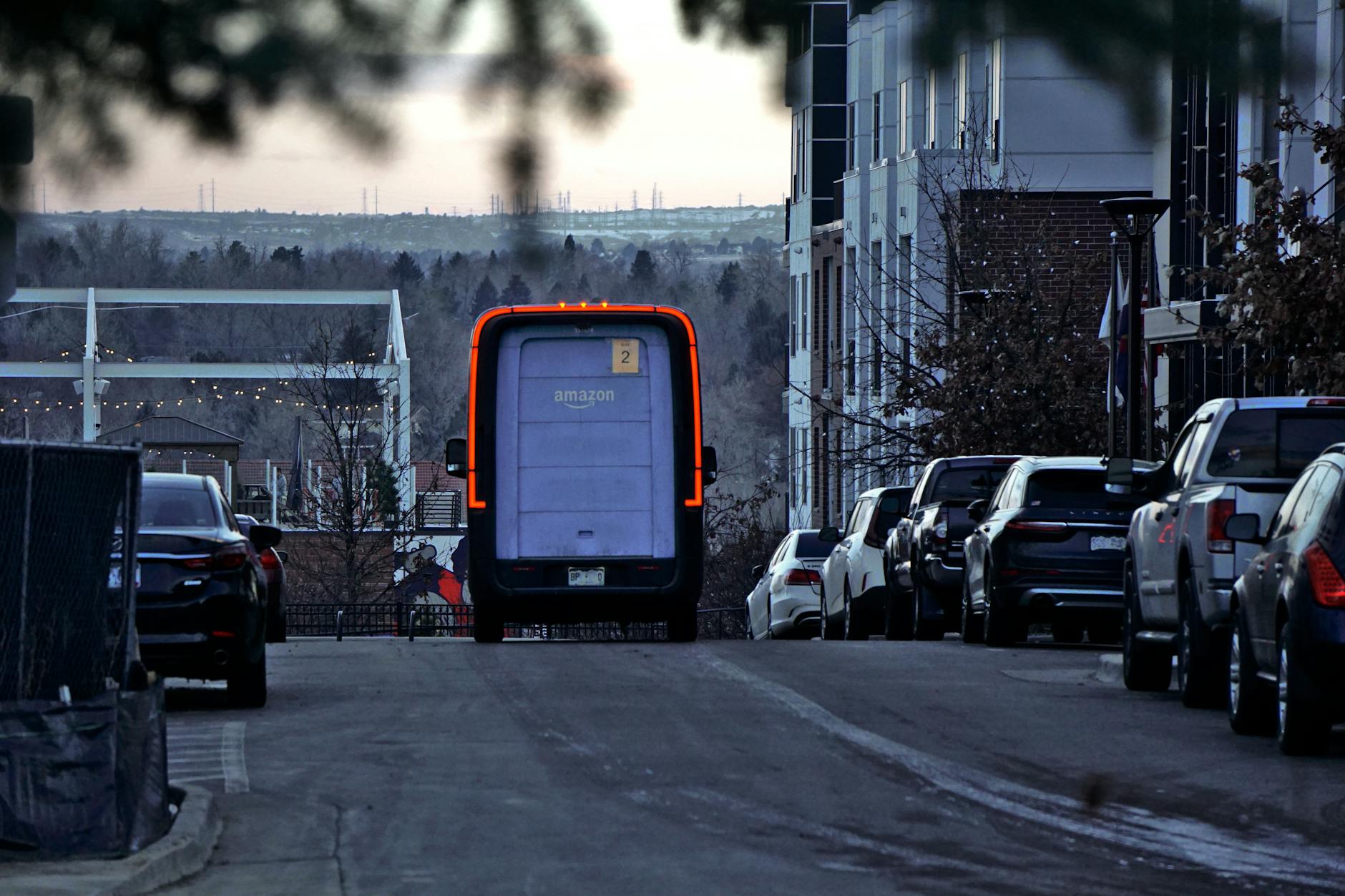
Amazon is preparing a new $1.9 billion investment in its Delivery Service Partner program, the network of independent companies that handles a significant share of the company's deliveries in the United States and Canada. The announcement, presented during Ignite Live, an event for DSP operators, concerns 2027 and brings together three priorities: helping partners hire and retain drivers, reducing road accidents and introducing more automation into last-mile planning and execution.
The figure should be read in the context of an infrastructure built over eight years. Amazon says it has committed a total of $21.7 billion to support DSPs and their Delivery Associates, the delivery workers employed by individual partner companies. This is therefore not an investment focused only on software and vehicles: it affects the operating model through which Amazon coordinates a large network of small businesses while leaving those companies as the formal employers.
That distinction is exactly what makes the announcement significant. The resources do not automatically translate into the same pay or benefits for every driver. Amazon raises the rates paid to DSPs, which then decide how to use the funds in their own operations and according to local market conditions. The company expects that, taking together the measures introduced over the past three years, national average driver pay could rise by 16%, with a further increase of about one dollar per hour bringing average pay close to $24 an hour.
Full-time DSPs offer health coverage and paid time off to their Delivery Associates, while some also provide 401(k) plans, education reimbursements and other benefits. Amazon emphasizes, however, that these choices remain with the individual partner companies. For the e-commerce group, the goal of higher compensation is to give partners more room to build stable teams and compete for workers; for DSPs, the practical challenge will be turning that support into conditions that actually reduce turnover without undermining the financial sustainability of the business.
Safety: cameras, alerts and predictive analysis
A significant part of the plan concerns road safety. Since 2022, Amazon says it has invested more than $543 million in initiatives, programs and technologies for DSPs and their teams. According to figures released by the company, serious crashes involving vehicles in the network fell by more than 23% over the past year. That is a positive indicator, but it comes from Amazon itself and the announcement does not include absolute figures, a comparison methodology or independent data, all of which would be necessary to measure the improvement more precisely.
Among the new measures are surround-view cameras on Rivian electric vans used for deliveries. The system is designed to recognize vehicles, cyclists and pedestrians around the van and alert the driver. Amazon plans to install it by the end of the year on 50% of the electric Rivian vehicles in its network. The aim is to address blind areas around vehicles that make frequent stops in residential neighborhoods and busy urban environments.
The Amazon Delivery app will also receive dynamic alerts for crashes, roadworks and closures along the route. Navigation will be able to change the itinerary automatically when it detects adverse weather or other hazards, without requiring action from the driver. In theory, that reduces the number of decisions drivers must make during a shift and allows the delivery plan to adapt to unexpected events. The real test will be how reliable and timely those alerts are, especially when a detour makes it harder to keep to the delivery sequence.
Amazon also intends to apply more advanced AI techniques to data collected by Netradyne safety cameras installed onboard. The idea is to identify driving behaviors and trends associated with a higher risk of crashes and then flag cases in which DSP owners may want to intervene with preventive coaching. This moves the system from merely recording events toward predicting possible risks. In a workplace that is already heavily measured, that could improve training and prevention, but it also makes it important to understand how the data will be evaluated, who will be able to access it and what consequences it could have for drivers.
Wellspring brings generative mapping to the last mile
The other major area of investment is artificial intelligence applied to the practical geography of deliveries. Amazon calls its generative mapping system Wellspring. It is designed to learn from repeated trips to the same address and gradually build a more precise representation of the physical environment. The goal is not simply to find a street: it is to help drivers understand where to stop, which entrance to use and where shared spaces such as lockers and mailrooms are located.
Since 2024, according to Amazon, Wellspring has identified 202 million potential parking areas, mapped 2.8 million building entrances and catalogued 85,000 mailrooms and lockers. Those figures illustrate the scale of the last-mile problem: a postal address alone is not enough to describe the real conditions a driver encounters when delivering a package. An apartment building may have multiple entrances, parking rules, courtyards, reception desks or dedicated mail areas; turning that information into operational guidance can avoid wasted trips and failed delivery attempts.
For Amazon, the technology becomes a way to make deliveries more accurate and reduce the time drivers spend searching for the correct location. For DSPs, routes that better reflect reality can have a direct impact on operating costs and shift organization. The limitation is that a map learned from previous deliveries must stay current in places that change quickly: construction sites, temporarily closed entrances, new local rules and weather conditions can make even recently collected information obsolete.
The plan also includes a $70 million commitment over five years for community-impact initiatives led by DSP owners. Amazon has not detailed in the material released how those resources will be allocated or which projects will be eligible. The figure does, however, reinforce the way the company presents the program: not just as a logistics component, but as an entrepreneurial network in which it intends to keep investing.
Overall, the new spending shows how Amazon is trying to integrate capital, software and labor more tightly across its delivery network. AI is not presented as a standalone product, but as an operating layer that observes routes, entrances, road conditions and driving behavior. The most important test will come in execution: whether higher compensation reaches workers in meaningful ways, whether safety tools reduce accidents without becoming opaque surveillance and whether intelligent maps can adapt to the real complexity of cities.