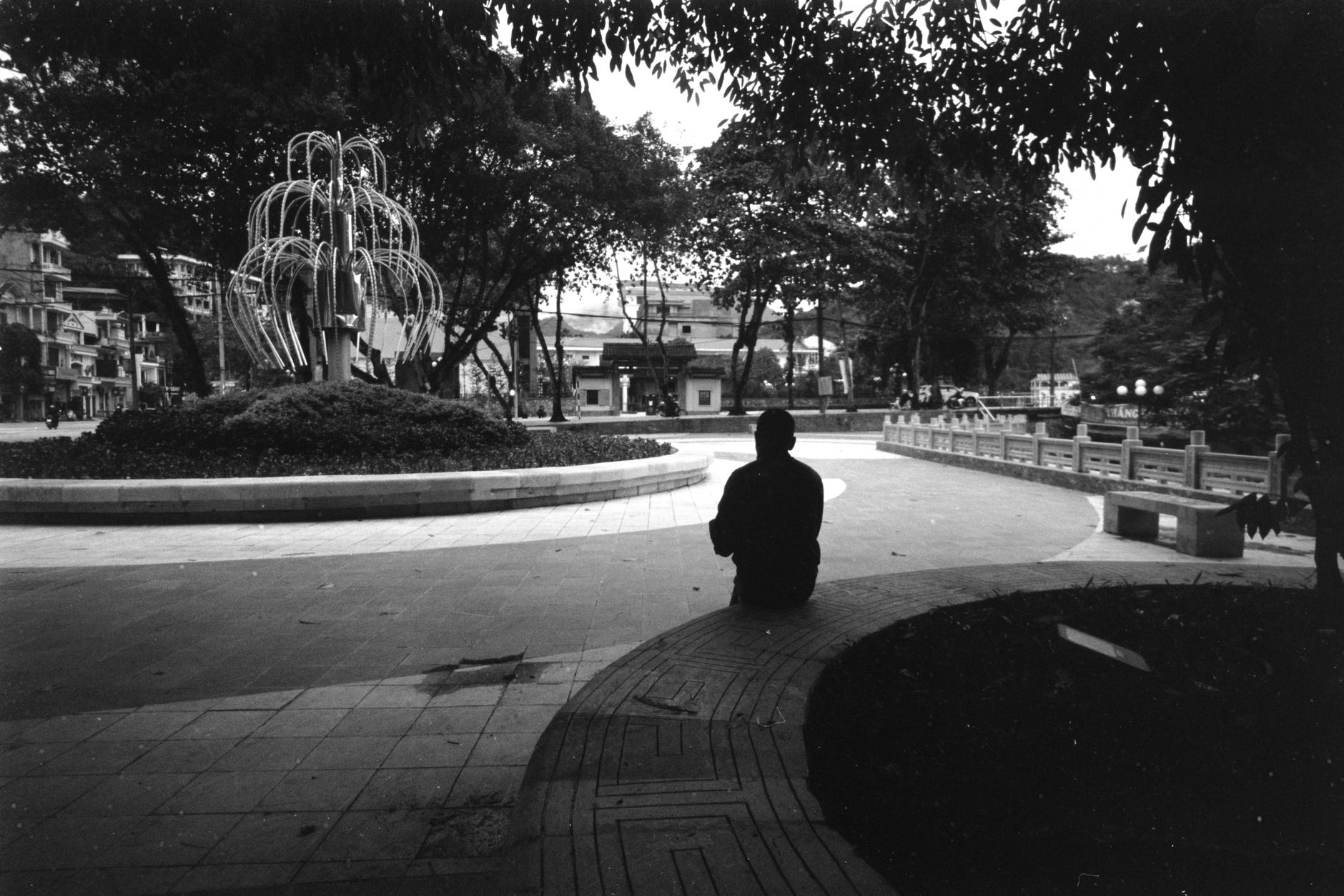
Many of the most popular places in contemporary cities have an implicit rule: to stay, you have to buy something. A table requires an order, a shopping mall is designed around purchasing, an event requires a ticket. These are important and often pleasant spaces, but they operate through a transaction.
This is why squares, parks, libraries, riverfronts, public courtyards, and even a simple bench hold a special value. They allow for something seemingly trivial: being there without having to justify one's presence with a purchase.
Public space is not empty space
UN-Habitat describes public spaces as fundamental elements of a city's social, environmental, and economic dimension. They serve to connect places, support activities, foster interactions, and make urban life accessible to diverse groups.
It is a useful definition because it avoids a common mistake: considering a square successful only if it is packed with events or commercial activities. Sometimes success lies precisely in the opposite possibility: the fact that it can be used freely and in unplanned ways.
Staying without consuming is a form of inclusion
The price of a coffee may seem small, but if the only way to sit down in a neighborhood is to order something, the space becomes less accessible. This applies especially to teenagers, the elderly, people on lower incomes, families, and those who spend many hours away from home.
Public seating, shade, a drinking fountain, or an accessible restroom may seem like minor elements compared to major urban projects. In reality, they determine who can use a place and for how long. They make it possible to wait for someone, read, talk, rest, or simply observe.
The city needs unscripted spaces
Commercial spaces are designed with a specific purpose. The best public spaces, on the other hand, often manage to accommodate multiple uses at the same time. A child plays, someone eats a sandwich, others cross the square, a person works on a laptop, two friends talk.
This overlap generates a form of vitality that is difficult to recreate artificially. It does not rely on a single audience and does not require everyone to do the same thing.
Greenery and well-being are not just an aesthetic matter
Green and open spaces also have more measurable effects. UN-Habitat highlights their contribution to physical health, mental well-being, social cohesion, and air quality. The WHO has in turn dedicated research lines and recommendations to the link between urban green spaces and health.
This does not mean that merely adding a few trees is enough to make a place inclusive. A park that is far away, hard to reach, or perceived as unsafe does not play the same role as a space woven into the neighborhood's daily fabric. Quantity matters, but so do distribution and quality.
The paradox of the attractive city
Cities want to be vibrant, bustling, attractive to tourists, and filled with restaurants and shops. That is understandable: these businesses generate jobs and make neighborhoods appealing. But if every space is progressively monetized, attractiveness risks eroding the very informal character of the city that made it desirable in the first place.
The goal is not to pit commerce against public space, but to maintain a balance. A good street can accommodate outdoor seating and benches. A public square can host a market and remain usable once the market packs up. A park can have a kiosk without turning into an open-air commercial venue.
The freedom to do nothing
Among the least-discussed urban rights is a very simple one: the ability to just be there. Without a reservation, without a ticket, and without someone coming over to ask what we would like to order.
It is a modest yet crucial function, as it allows the city to be truly shared. Not every square meter needs to generate a transaction to produce value. Sometimes, value arises precisely because a space remains available, open, and undefined enough to be used by different people.


