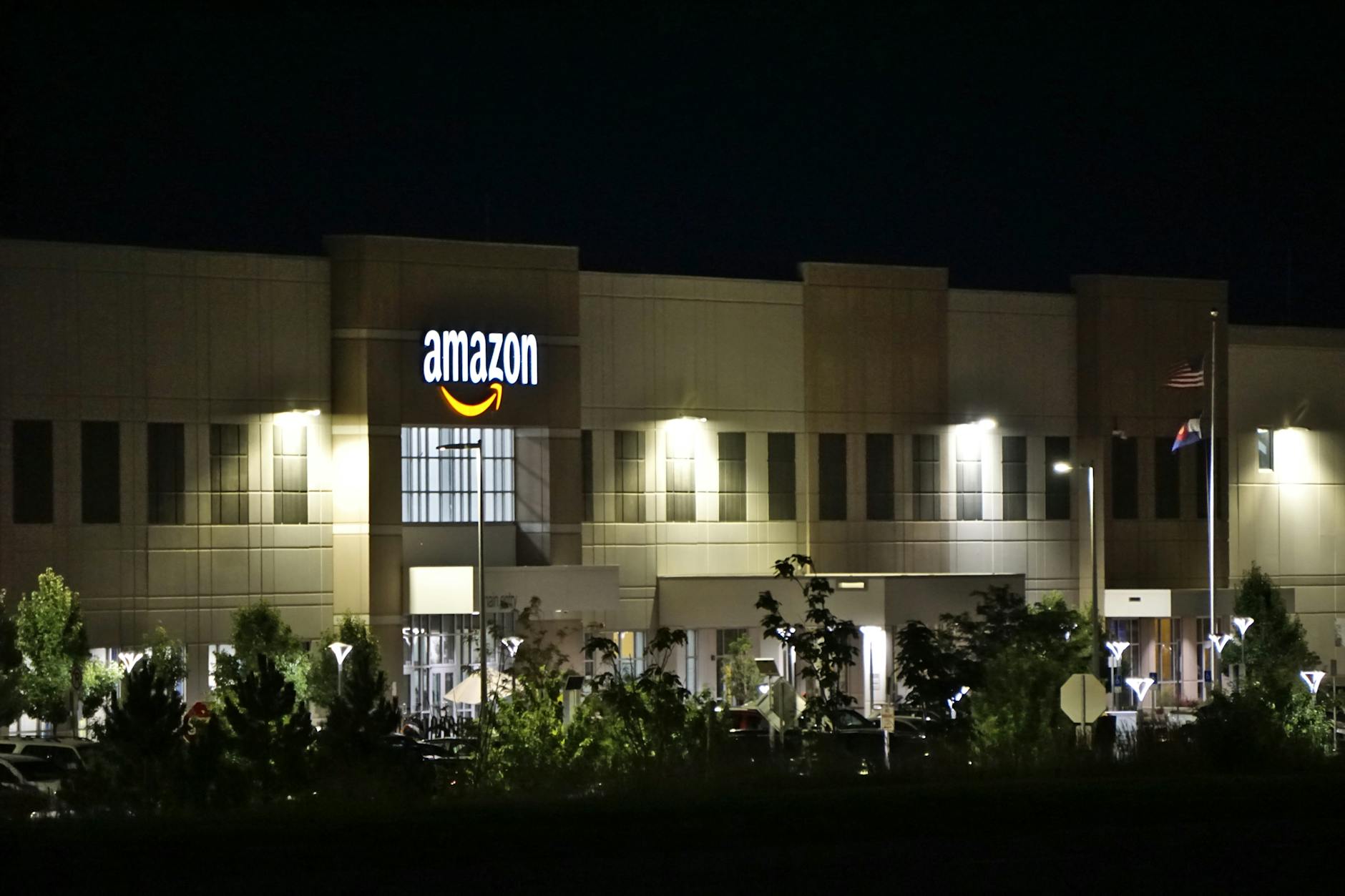
Amazon has appointed Kevin Mandia to its board of directors, bringing into the room where strategy, investment, and risk are discussed one of the professionals who contributed most to building the modern incident response industry. Mandia founded Mandiant, a company that became synonymous with threat intelligence and incident response before its acquisition by Google, and is currently the founder and CEO of Armadin as well as co-founder and general partner of the Ballistic Ventures fund.
The announcement comes directly from Amazon and was also reported by CNBC. Its significance goes beyond an individual appointment: cybersecurity is entering the boardroom as a core competency, on equal footing with finance, retail, logistics, and technology. For a company that operates AWS, marketplaces, devices, advertising, payments, data belonging to millions of customers, and a global physical supply chain, cyber risk is now a variable that can alter revenue, reputation, and operational continuity.
Mandia built his career inside crises
Mandiant grew by doing work that becomes visible primarily when something has already gone wrong: reconstructing attacks, identifying threat actors, containing intrusions, and explaining to companies what happened. This experience differs from that of an executive accustomed mainly to product development. It means viewing the organization from the adversary's perspective, seeking out the weakest link among people, credentials, software, and suppliers.
It is precisely the kind of perspective that a modern board can leverage. Security decisions are no longer just about how many tools to purchase, but which risks the company is willing to accept, which services must be isolated, how to manage a crisis, and how much to invest before an incident makes that investment inevitable.
AWS turns security into a systemic issue
Amazon is not just protecting itself. AWS hosts infrastructure for enterprises, startups, governments, and critical services. A vulnerability or significant outage can ripple far beyond the corporate perimeter. This does not mean the cloud is inherently insecure; it means that infrastructure concentration amplifies the importance of resilience practices.
For the board of directors, then, cyber risk cannot be evaluated solely in terms of data loss. What matters is service availability, reliance on external components, recovery capabilities, and regulatory impact across dozens of jurisdictions.
AI expands both the attack surface and defense tooling
Amazon is investing heavily in artificial intelligence through AWS, its own chips, Bedrock services, and partnerships with model developers. AI brings new commercial opportunities, but it also introduces challenges: prompt injection, agent abuse, machine identity management, model protection, and control over data used in enterprise applications.
At the same time, defenders and attackers are increasingly using generative systems to accelerate analysis, code writing, and information gathering. A director with hands-on incident response experience can help separate rhetoric from tangible threats, avoiding both panic and complacency.
The board is where security meets capital
Many organizational vulnerabilities exist not because engineers overlook the problem, but because fixing it requires budget, time, and changes that compete with other priorities. Upgrading legacy systems, segmenting networks, reducing privileges, and building redundancy can slow down projects and increase costs in the short term.
When cyber risk is directly understood by the board, the conversation changes. It is no longer “how much does security cost?”, but “how much does the risk we are retaining cost?”. The difference may seem semantic, but it changes the quality of decision-making.
Authorities are demanding more accountability from leadership
American and European regulators are ramping up incident reporting obligations and executive liability. Directives such as NIS2 in the European Union and the new disclosure rules in the United States have made it harder to confine cyber risk to IT departments.
For a global group, governance must therefore harmonize differing standards and ensure that technical information reaches top management in an understandable yet unvarnished form. An expert on the board can serve as a translator between engineering, legal, and finance.
The supply chain is where a giant depends on smaller players
A company the size of Amazon relies on thousands of vendors and third-party software. The most effective attacks do not necessarily strike the primary target directly; they go through a partner with weaker controls. Recent years have shown how a library, a management system, or a SaaS platform can become the vector to reach much larger organizations.
Mandia has worked extensively on incidents of this exact nature. The fundamental lesson is that security does not end at the corporate perimeter. Organizations must understand dependencies, software bill of materials, vendor access, and the ability to quickly revoke credentials.
The appointment signals a cultural transformation
Ten years ago, a board member specializing primarily in cybersecurity would have been a relatively rare choice. Today, major banks, industrial enterprises, and tech platforms increasingly seek figures with security expertise. It is a sign of risk maturation: no serious board can treat it as a secondary operational matter anymore.
Mandia's presence does not guarantee that Amazon will avoid every incident. No organization can promise that. However, it can improve the questions asked before an incident occurs: which assets are truly critical, which scenario are we overlooking, how long would recovery take, who decides during a crisis?
For Amazon, security is now part of the product
In the cloud, customers are also buying trust. A more powerful feature loses value if an enterprise does not consider it secure enough to use with sensitive data. As AWS pushes AI agents and increasingly automated infrastructure, security and product become inseparable.
Kevin Mandia's appointment to the board therefore reflects a simple yet profound shift: cybersecurity is no longer just the department tasked with keeping hackers out. It is a discipline that influences which products are built, which companies are acquired, which partners are chosen, and how much risk can be taken on. Bringing it to the board of directors means recognizing that, for a digital giant, protecting infrastructure is now a business decision.