Kuch Kuch Hota Hai will return to Edinburgh in 2028, thirty years after its release, with a special screening at the Edinburgh International Film Festival and an expected appearance by director Karan Johar. The announcement concerns one of the titles that helped define the popular Hindi cinema landscape at the turn of the millennium, but it also carries a clear industry significance: Scotland aims to strengthen its relationship with the Indian audiovisual sector.
The invitation to Johar was formalised during a meeting at the Mumbai offices of Dharma Productions, the director and producer's company. Present at the meeting were Scottish First Minister John Swinney and David Smith, interim executive director of Screen Scotland. The discussion was not limited to the film's retrospective: the parties explored Scotland's role as a potential location and partner for Indian cinema and television, addressing production, co-productions, talent training, and cultural exchanges.
The dates for the 81st edition of the Edinburgh International Film Festival have not yet been announced, nor have other guests for the commemorative event been revealed. However, Johar's intention to attend has already been confirmed. Ahead of the 2028 event, the festival will celebrate its 80th edition from 12 to 18 August 2027.
An Indian film that turned landscape into narrative
Released in 1998, Kuch Kuch Hota Hai marked Karan Johar's directorial debut. The cast is led by Shah Rukh Khan, Kajol, and Rani Mukerji, with Salman Khan playing Anjali's fiancé. The story follows Rahul, now a widower, and his young daughter's efforts to reunite him with Anjali, his college friend who loved him unrequitedly before his marriage to Tina.
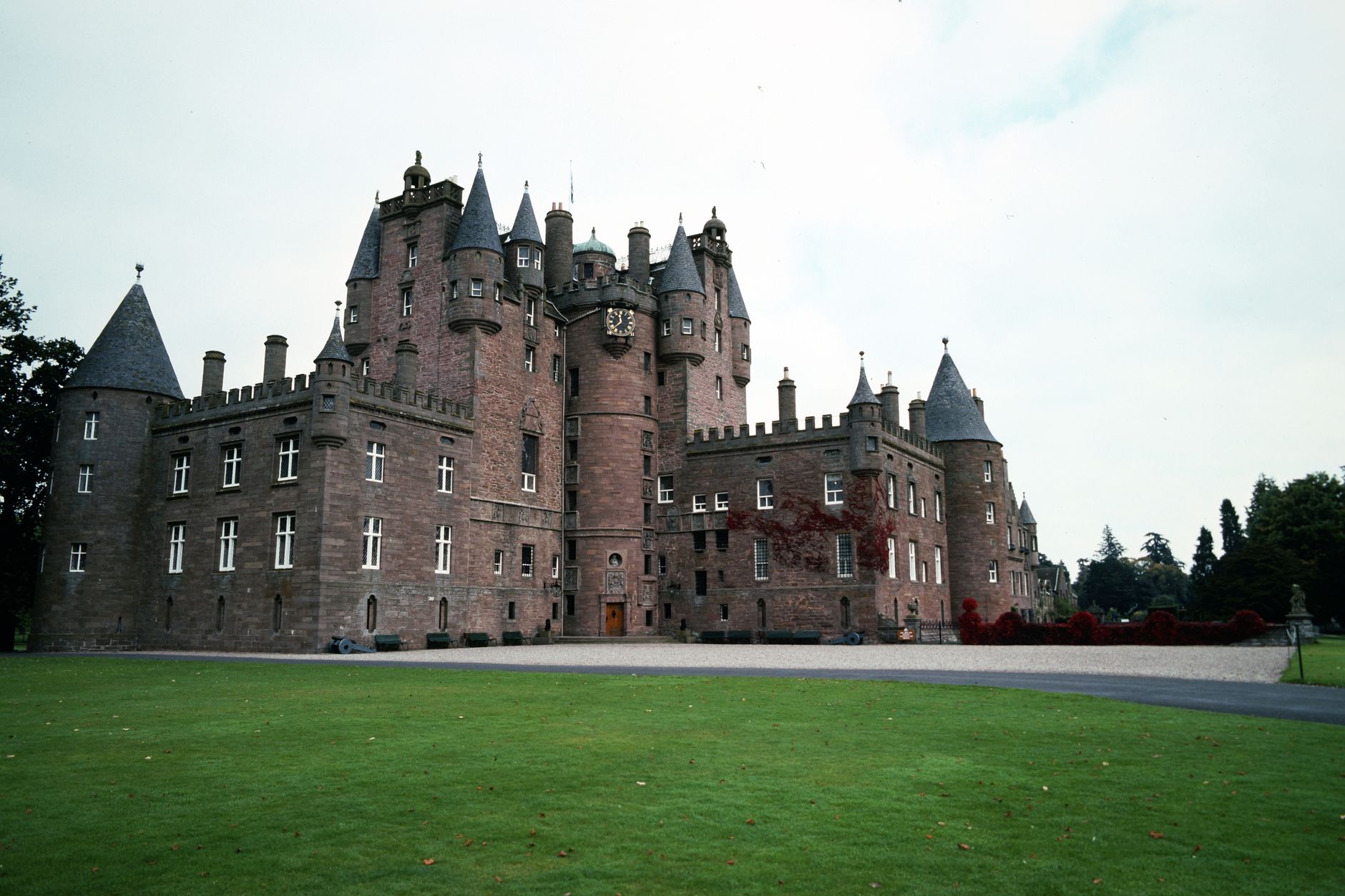
The film's enduring place in collective memory is not solely due to its stars, its soundtrack, or the melodramatic structure that resonated with a vast audience. A significant part of its visual identity is tied to the scenes filmed in Scotland. The crew shot, among other locations, at Eilean Donan Castle, Glen Coe, Tantallon Castle, and Inchmahome Priory. Those settings did not remain merely an exotic backdrop: they became part of the perception of a romantic, spectacular, and overtly international cinema, at a time when Indian productions had not yet made the use of Scottish locations such a regular occurrence.
For Scotland, this legacy holds value that goes beyond nostalgic appeal. The country can present Kuch Kuch Hota Hai as a concrete case of global exposure achieved through commercial Indian cinema. It serves as useful leverage in an increasingly competitive locations market, where territories and film commissions seek to demonstrate not only that they can host sets, but that they can leave a recognisable imprint on the works that choose to shoot there.
The festival as a platform for relationships, not just celebrations
The anniversary screening comes as the Edinburgh International Film Festival seeks to consolidate its new phase. The event was relaunched in 2024 under the leadership of CEO and festival director Paul Ridd and producer Emma Boa, with the support of Screen Scotland. Following the 80th anniversary edition in 2027, the 2028 edition will therefore be the first opportunity to combine a major festival milestone with that of a film already tied to the territory.
The project should not be read as the announcement of a co-production or a new shoot, as no agreements of this kind have been disclosed at present. It would be premature to attribute contractual implications to the meeting with Dharma Productions that are not on the public record. What has emerged is a political and industrial interest: during his visit to India, Swinney met with figures from the national audiovisual sector, including representatives of Dharma, to present the opportunities offered by the Scottish ecosystem.
In this context, a tribute to Johar takes on a concrete diplomatic function. Around a title familiar to Indian audiences and the diaspora, it brings together a festival, an audiovisual promotion body, and a production company that carries significant weight in Hindi cinema. The film thus becomes a more immediate entry point than an abstract pitch on incentives or infrastructure: it serves as a reminder that those locations have already been part of an enduring cultural success.
For Dharma Productions, the invitation also confirms the international endurance of a work created when the company was in its infancy and Johar was directing his debut feature film. In a producer's catalogue, anniversaries are not merely commemorative exercises. They can generate new programming opportunities, public encounters, rights monetisation, and renewed editorial attention for films capable of spanning multiple generations.
Why Bollywood is looking abroad
Major Indian productions have long had a structural relationship with filming outside national borders. International locations offer landscapes, architecture, and visual recognition that can bolster the narrative, but the choice also hinges on less visible factors: administrative procedures, crew availability, studios, logistics, transport links, and the ability of local institutions to support complex productions.
Scotland aims to join or strengthen its position within this pipeline. In Swinney's words, the country possesses the scenery, infrastructure, and skills needed to support film and television projects of varying scales. The Mumbai meeting broadened the scope of the discussion to professional development and cultural exchange, elements that point to an ambition extending beyond mere location scouting. It remains to be seen, however, whether this dialogue will yield tangible initiatives and within what timeframe.
From the festival's perspective, screening a popular Indian film is also a way to engage with communities that share an emotional and cultural bond with Scotland. Swinney emphasised that the title holds a special place for audiences both within the country and beyond its borders. This is a significant point for an event that, following its relaunch, must balance cultural prestige, local identity, and the ability to reach diverse audiences.
However, no newly restored version of the film or full cast reunion has been announced. Available information indicates that other guests will join the screening, though no names or details regarding the session format have been shared. The full programme for the 2028 edition will also be unveiled at a later date.
For now, the value of the initiative lies in its symbolic clarity: a film that helped make Scotland familiar to Hindi cinema audiences will be brought back to the places that shaped part of its visual imagery. Two years ahead of the event, Edinburgh has the time to turn that memory into a more stable industry relationship. The screening will be the public moment of an effort that, if it delivers results, will be measured primarily by the projects that could follow.


