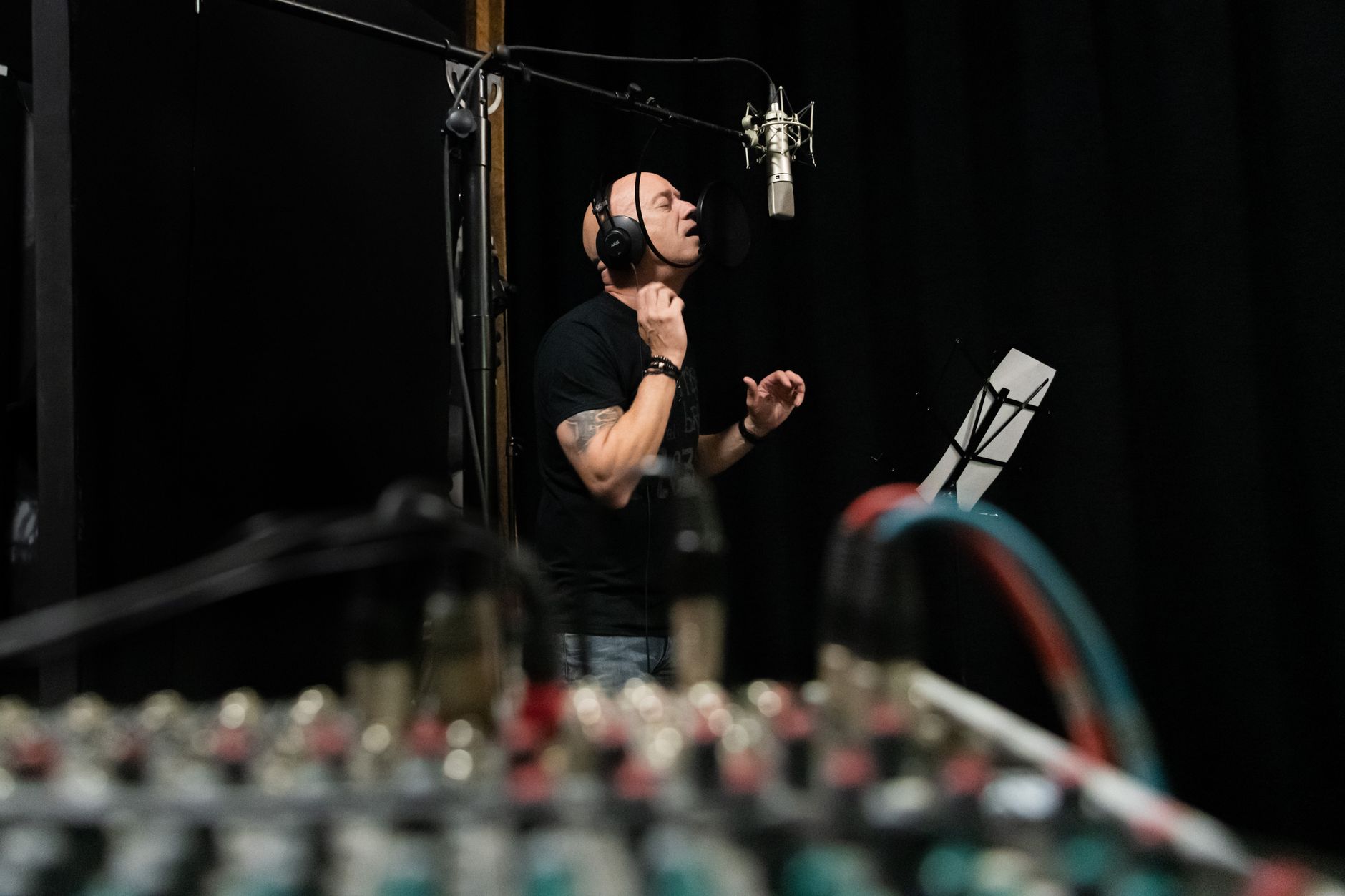
Mike McFarland, actor and voice acting professional who tied his name to the English editions of some of the most popular anime of the past quarter-century, died on September 10 at the age of 56. The news was confirmed by Crunchyroll, which commemorated his talent and the bond he built with colleagues and audiences. In 2025, McFarland had been diagnosed with glioblastoma, an aggressive form of brain cancer.
For English-speaking viewers, his vocal tone remains primarily associated with Buggy the Clown, a character in One Piece he played from 2007 until his death. But his career was not limited to a single role, however recognizable: in Dragon Ball and Dragon Ball Z, he voiced Master Roshi and Najirobe, thus becoming part of two franchises that played a decisive role in establishing Japanese animation on the international market.
McFarland's passing therefore also affects a part of the production pipeline that turned anime into sustained audiovisual products capable of spanning platforms, generations, and ever-expanding catalogs. In this journey, English dubbing was not simply an adaptation process: it shaped performances that audiences recognized just as much as the original voices, especially for series followed for years and re-released across home video, streaming, theaters, and television.
A career built inside US anime production
McFarland spent years working in the Texas production ecosystem that long represented one of the primary anime dubbing hubs in the United States. He worked first with Funimation and later with Crunchyroll, following the merger of the two entities. In that setting, he took on diverse roles: alongside voice acting, he worked as a scriptwriter, director, and line producer.
This range of responsibilities helps illustrate his professional standing. Serial dubbing depends on more than just casting decisions: it requires dialogue adaptation, directing performers, coordinating with production, maintaining continuity across episodes and seasons, and ensuring consistency across narrative universes that are often massive. In long-running anime titles, the work also proceeds in parallel with the arrival of new episodes, films, specials, and spin-offs. Those who understand both the recording booth and the production machinery from the inside help hold these moving parts together.
Crunchyroll described him as someone capable of giving so much both to those who knew him and to fans who had encountered his work through anime. It is a tribute that reflects the image of a figure deeply rooted in an industry where technical credits are often less visible than the faces of live-action performers, despite being crucial to the local reception of a series.
Buggy, Dragon Ball and the characters that left a mark on audiences
McFarland's longest-running role was Buggy in One Piece. The character, initially introduced as a farcical pirate antagonist, gained significantly more prominence over time within the universe created by Eiichiro Oda. Voicing Buggy in English since 2007 meant accompanying the expansion of a series that, even outside Japan, grew from a cult phenomenon into a global intellectual property.
In Dragon Ball and Dragon Ball Z, Master Roshi and Najirobe allowed him to navigate between different registers. The former is one of the saga's foundational masters and a recurring comedic character; the latter features with a more peripheral yet instantly recognizable presence. In both cases, McFarland worked on characters belonging to an imagery established for decades and subject to particularly intense scrutiny from fan communities.
His voice credits also included Jean Kirstein in Attack on Titan, Jean Havoc in Fullmetal Alchemist, and Teppei Sugo in Psycho-Pass. He had played Makoto Hyuga in the films of the Evangelion series, Sky Master in Heaven’s Lost Property, Goemon Ishikawa in Lupin III: The Woman Called Fujiko Mine and other Lupin III films, as well as George in Case Closed.
More recent work includes Hiroshi Odokawa in Odd Taxi, Big Bad Wolf in Date A Live IV, and E.G. Mine in Trigun Stampede. The list highlights a career that did not stop with the major titles that reached the West between the 1990s and 2000s: McFarland continued to take part in the productions accompanying the current anime streaming era, marked by a broader offering and faster international localization.
The industrial value of a voice that remains in the catalogue
When a voice actor dies, the most immediate consequence for audiences is emotional: fans recognize in the voice a piece of memory tied to a character. For the industry, however, the matter also carries an operational dimension. Franchises like One Piece and Dragon Ball are not closed works: they continue to generate episodes, films, spin-off content, and new distribution windows. The loss of a longtime cast member therefore raises the question of vocal continuity in future localized versions.
At the moment, no announcements have been made regarding potential replacements for McFarland's roles or decisions concerning upcoming productions. This step will depend on the projects currently in production and the choices made by Crunchyroll and the other entities involved in localization. Whatever the solution, comparisons with performances established over many years are inevitable: for serialized audiences, the voice is not an interchangeable detail, but a core component of a character's identity.
McFarland's case also serves as a reminder of how much the international success of anime relies on professionals working at the intersection of creativity and organization. The growth of digital platforms has made Japanese works more accessible, but it has not eliminated the value of human adaptation. Choices in translation, voice acting, and directing dictate the tone, pacing, and recognizability of a localized release; in the English-speaking market, that work helped build an enduring relationship between major Japanese IPs and North American audiences.
McFarland leaves behind a presence spanning series vastly different in tone and audience, from shonen adventures to more adult and experimental narratives. It is a professional legacy that lives on across existing catalogs and released editions, while underscoring even further the central role of the artists and technicians who give a local voice to the stories of global animation.


