With NAZA, Yuval Abraham and Rachel Szor return to the Mostra del Cinema di Venezia with a film that deliberately chooses not to build itself around a sensational revelation. The two Israeli directors, part of the four-author collective behind the Oscar-winning No Other Land, instead gather the voices of 24 technicians and individuals linked to Israeli military intelligence. None of them show their face; none are identified. All speak in Hebrew and describe, according to the account presented in the documentary, the day-to-day workings of a decision-making machine that transforms civilian casualty forecasts into an operational parameter.
The subject is Gaza, but the perspective comes from inside Israel. The film does not follow the aftermath of the bombings on the ground, nor does it adopt the structure of a traditional investigative report. It places viewers in front of people sitting in the shadows, often reduced to silhouettes, and lets procedures, technical language, and administrative formulas convey the scale of the disaster. It is a precise narrative choice: not seeking a comforting distance between those speaking and what took place, but situating the testimonies within the ordinary confines of work carried out in front of systems and consoles.
A title that encapsulates the method depicted in the film
The title originates from a Hebrew term used to denote “collateral damage”. Its closest English rendering would be CODA, but Abraham and Szor derive the name NAZA from that expression. In the film, this word does not remain an abstract definition. It becomes the key through which interviewees describe thresholds and calculations applied to operations: the number of civilian deaths deemed acceptable to strike a military target.
The review by TheWrap, which viewed the film in Venice, cites a central example in the work's construction: twenty civilian casualties considered an acceptable price for eliminating a target. The documentary's impact, according to the account, stems precisely from the juxtaposition between the simplicity of that calculation and the scale of the territory across which it is applied. In a densely populated Gaza Strip, multiplying such criteria across thousands of targets yields consequences that cannot be considered marginal.
The film starts from the present situation and moves backward, examining how the death toll reached current levels. The source cites an estimate exceeding 70,000 deaths. NAZA does not offer an answer rooted in a single order, a single weapon, or an isolated episode: it focuses attention on the architecture of decisions, classifications, and authorizations that, from the perspective of the interviewees, makes that outcome possible.
Concealed voices, exposed responsibilities
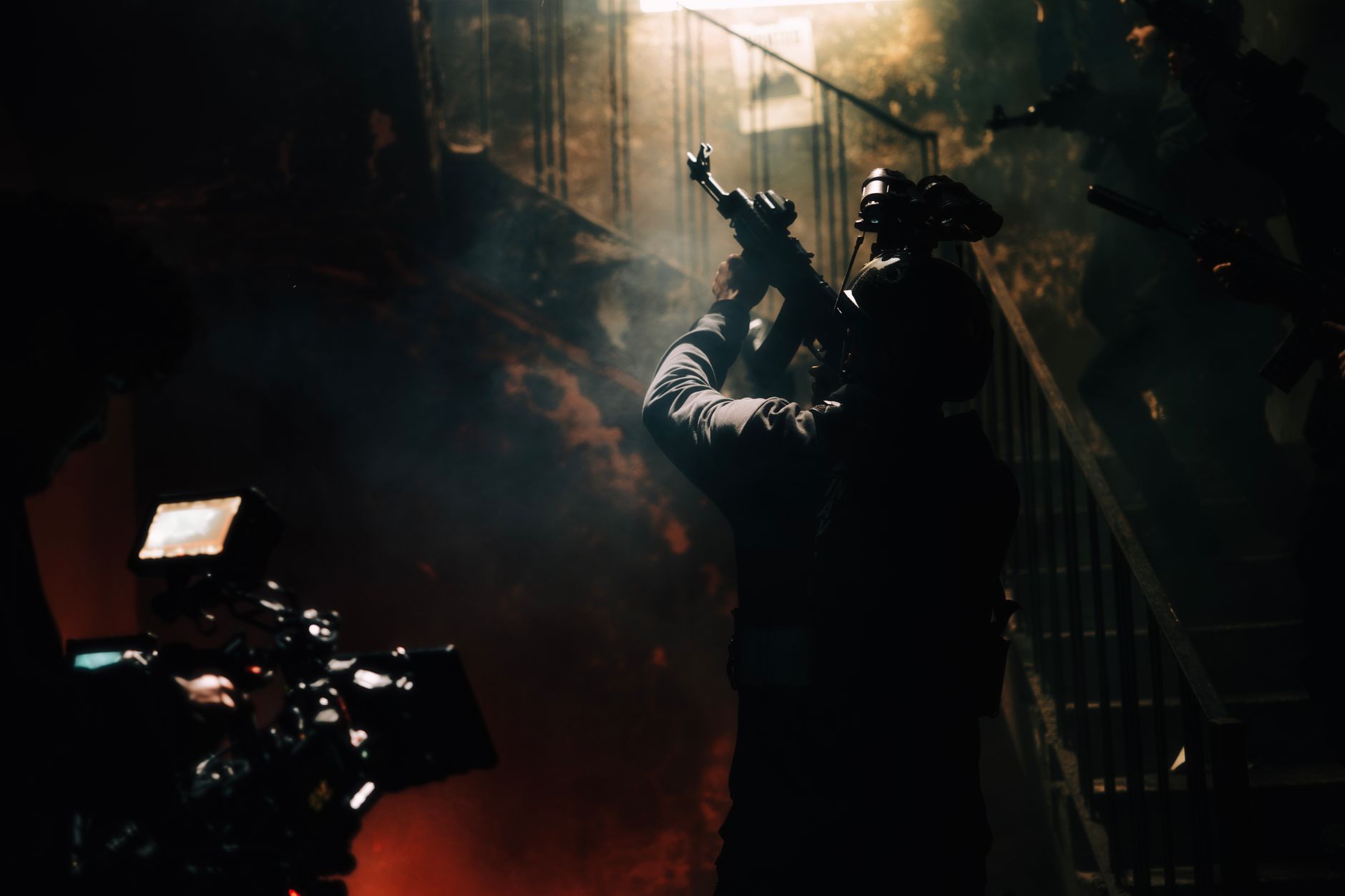
Identity protection is a substantial part of the film. The 24 participants are anonymous due to fears of potential legal consequences, and the staging preserves their opacity: low lighting, unrecognizable faces, professional identities defined only to the extent necessary. They are not presented as dissident heroes, nor does the documentary appear to try to turn them into exceptional figures. On the contrary, the choice made by Abraham and Szor is to show personnel describing roles perceived as technical, circumscribed, and detached from any moral assessment.
This is where the film’s apparatus gains its weight. Phrases like "my role is technical" or the notion of being unable to express a moral stance are not treated as a sufficient justification. They serve to highlight the fragmentation of responsibility within an apparatus: those who select, those who analyze, those who execute, and those who authorize can view themselves as individual cogs, while the sum of those tasks carries a massive human impact.
The direction therefore avoids structuring the narrative around questions of individual intentions. The focus shifts to the "how": how targets are determined, how civilian harm is estimated, how bureaucratic terminology manages to make manageable what, outside of that terminology, appears untenable. It is an approach that denies the viewer the shortcut of the isolated case and calls a system into question.
After No Other Land, another front for Israeli documentary
The authors' background also matters in terms of reception. No Other Land, winner of an Oscar, was made by a collective of four Israeli and Palestinian filmmakers and documented the demolitions and evictions in the Palestinian community of Masafer Yatta, in the West Bank. With NAZA, Abraham and Szor work in a different lineup and shift their focus to Gaza, while maintaining a direct connection to Israeli power structures.
The fact that the interviews are conducted entirely in Hebrew is neither a matter of accessibility nor a purely identitarian choice. It defines the film's implicit audience and makes it harder to dismiss as an outsider's perspective lacking contextual knowledge. The critique of the IDF's actions comes from Israeli directors and through interviewees who describe their own professional environment from the inside. This will not make the film immune to controversy, especially given the backlash that accompanied the directors' previous work, but it clarifies its stance.
The Guardian is listed among the work's producers. This circumstance highlights an increasingly close relationship between investigative journalism and auteur documentary, without turning NAZA into a mere adaptation of a series of articles. According to the review by TheWrap, much of the most shocking information highlighted by the film had already surfaced in the press, including the British newspaper. The film's purpose is therefore different: to give form, duration, and presence to material that breaking news has often delivered in a piecemeal fashion.
The industrial value of a film difficult to separate from its context
At the Mostra di Venezia, NAZA enters a festival circuit where political documentaries can garner international attention, reviews, sales, and subsequent distribution in theaters or on streaming platforms. Yet its very nature will make every step more complex. The anonymity of the sources inevitably limits the audience's ability to independently assess their profiles; the inclusion of military topics and the war in Gaza exposes the work to a debate that rarely remains confined to film criticism.
This does not diminish the project's relevance; if anything, it defines the ground on which it will be discussed. The strength of NAZA, as described, does not rely on shocking imagery used as emotional proof, but on the persistence of people illustrating a working language. The film asks the viewer to listen to the process by which human lives are converted into thresholds, forecasts, and collateral damage.
For Abraham and Szor, it is also a follow-up test after a global success that is difficult to replicate without shifting register. No Other Land took the form of a shared story between authors with different perspectives; NAZA instead opts for subtraction, a shielded voice, and reconstruction through accumulation. Its trajectory after Venezia will show how much space the international market will grant a documentary that promises no reconciliation and places the concrete consequences of military decisions front and center.