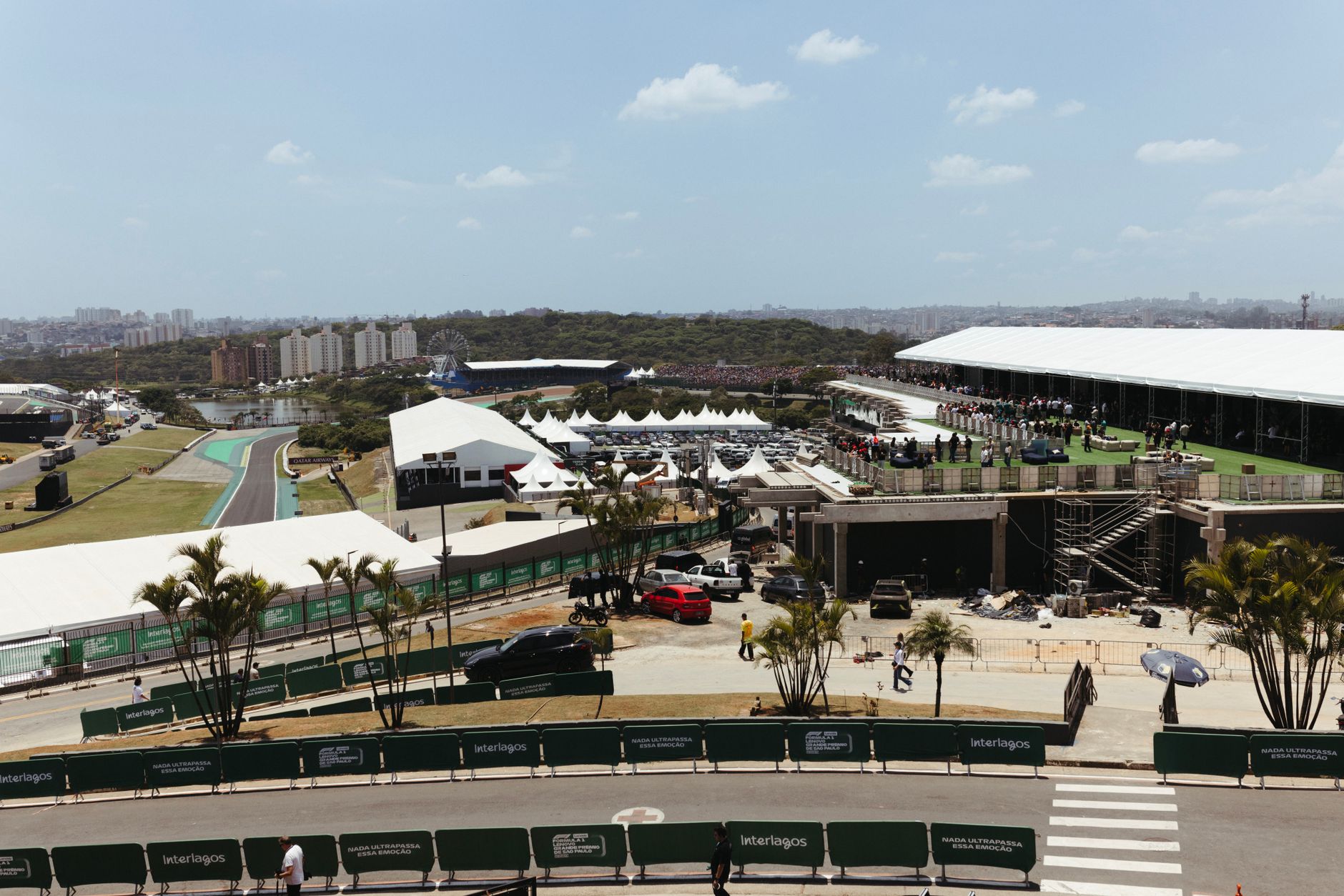
The Brazilian Grand Prix delivered a victory for Lando Norris, built on a Sunday when Interlagos brought two classic Formula 1 elements back to the forefront: unpredictable weather and the weight of pit-lane decisions. The McLaren driver finished ahead of Max Verstappen and Isack Hadjar, while Mercedes converted George Russell's fourth place and Kimi Antonelli's fifth into the result needed to secure the 2026 Constructors' World Championship.
The drivers' championship had already been decided in Mexico, with Antonelli crowned world champion, but the teams' title remained up for grabs in Brazil. The Mercedes duo's finish, though far from the fight for the win, settled the score: the team reached 652 points, moving completely out of reach. Ferrari remains second on 512 points, ahead of Red Bull on 401 and McLaren on 398.
For the Brackley-based constructor, the milestone is especially significant as it comes after an anything-but-straightforward weekend. Antonelli and Russell struggled to get the tyres into their optimal operating window and reported balance issues. The team also ordered a position swap between its drivers, without ever finding the pace to challenge for the podium. The consistency built up over the season, rather than this standalone Brazilian performance, made the difference in the title race.
A rewritten grid before the start
The race had been set up by an unusual Saturday. Norris had started from pole position for the third consecutive year at Interlagos, but numerous technical penalties shook up the front rows. Russell, second in qualifying, dropped to seventh due to a power unit change. Charles Leclerc, originally fourth, started fourteenth for the same type of penalty.
The most extreme situation involved Lewis Hamilton, handed a 75-place grid penalty for replacing various components, and Verstappen, relegated to the back of the grid following a 30-place penalty. The Red Bull champion started twenty-first, ahead only of Sergio Perez, who was also penalised. Arvid Lindblad dropped ten places for fitting a new internal combustion engine and turbo, while Gabriel Bortoleto received a ten-place penalty that did not materially alter his grid position, which had already been shaped by penalties handed to others.
This scenario elevated drivers and teams less accustomed to those positions: Liam Lawson and Nico Hulkenberg lined up on the second row, with Ollie Bearman sixth in the Haas. Fernando Alonso and Alex Albon occupied the eighth and ninth grid slots for Aston Martin and Williams. For Verstappen, however, Sunday quickly turned into a recovery drive.
Tyres and rain decide the GP
The start took place on intermediate tyres, an inevitable choice given the wet track conditions. Hamilton and Verstappen made up ground rapidly in the early stages, but the track's evolution opened up a new strategic battle. Hamilton was among the first to switch to softs, triggering a sequence of pit stops that involved most of the leading pack.
Mercedes suffered above all from unstable tyre temperatures. After the pit stop, Antonelli reported over the radio that he felt something abnormal with the car; the team identified the tyres as the cause before a spin cost him the lead. Norris capitalized on the Mercedes misstep to take the lead and, once out in front, effectively managed a race where reference points were constantly shifting.
Ten laps from the end, the return of heavy rain forced another switch to intermediates for the entire grid. The double-stack pit stops created the usual high-pressure moments in the garages. Ferrari experienced a tricky moment when Hamilton briefly lost control of his car in an attempt to avoid a simultaneous stop with the other car, though he managed to continue.
Norris maintained his lead through to the chequered flag. Behind him, Verstappen completed a comeback drive from twenty-first on the grid to the second step of the podium. Hadjar gave Red Bull a double presence in the top three, securing the fourth podium of his career. The result delivered a very positive race weekend for the team, even though Red Bull remains third in the Constructors' standings, with just a three-point margin over McLaren.
Mercedes champion, but the hierarchy remains closely contested
The Constructors' title rewards a season in which Mercedes could rely on the consistency of its drivers. Antonelli leads the drivers' standings with 390 points, already secure after clinching the title at the previous round in Mexico. Verstappen is second with 279, Russell third with 262, and Hamilton fourth with 261. Norris, thanks to the 25 points from his Brazilian victory, rises to 246, without altering the positions immediately ahead of him.
The picture from Interlagos is therefore more complex than a simple Mercedes celebration. McLaren secured the race win with Norris, but Oscar Piastri finished only sixth. Red Bull maximized a chaotic situation with Verstappen and Hadjar. Ferrari brought Leclerc home in seventh and Hamilton in ninth, limiting the damage following penalties. In the team battle, this keeps the competition for second place this season alive: Ferrari holds a comfortable lead, while Red Bull and McLaren are separated by just three points.
The points-paying positions in São Paulo were completed by Lawson, eighth with Racing Bulls, and Hulkenberg, tenth for Audi. Behind them, Lindblad finished eleventh, Alonso twelfth, Franco Colapinto thirteenth, and Pierre Gasly fourteenth. Albon was fifteenth, Bortoleto sixteenth, Bearman seventeenth, Perez eighteenth, and Carlos Sainz nineteenth. Rafael Camara finished twentieth; Lance Stroll and Valtteri Bottas occupy the final two positions in the classification.
- Constructors' Standings after Brazil: Mercedes 652 points, Ferrari 512, Red Bull 401, McLaren 398.
- Top 6 Drivers: Antonelli 390, Verstappen 279, Russell 262, Hamilton 261, Leclerc 251, Norris 246.
- Brazilian GP Podium: Norris, Verstappen, Hadjar.
The calendar now allows for a two-week break before the Las Vegas Grand Prix, scheduled for November 21. The Constructors' title is no longer in doubt, but the final races retain genuine interest for the positions behind Mercedes and for the teams' ability to manage a season that, even at Interlagos, demonstrated how much a technical penalty or tire choice can alter the outcome of a weekend.