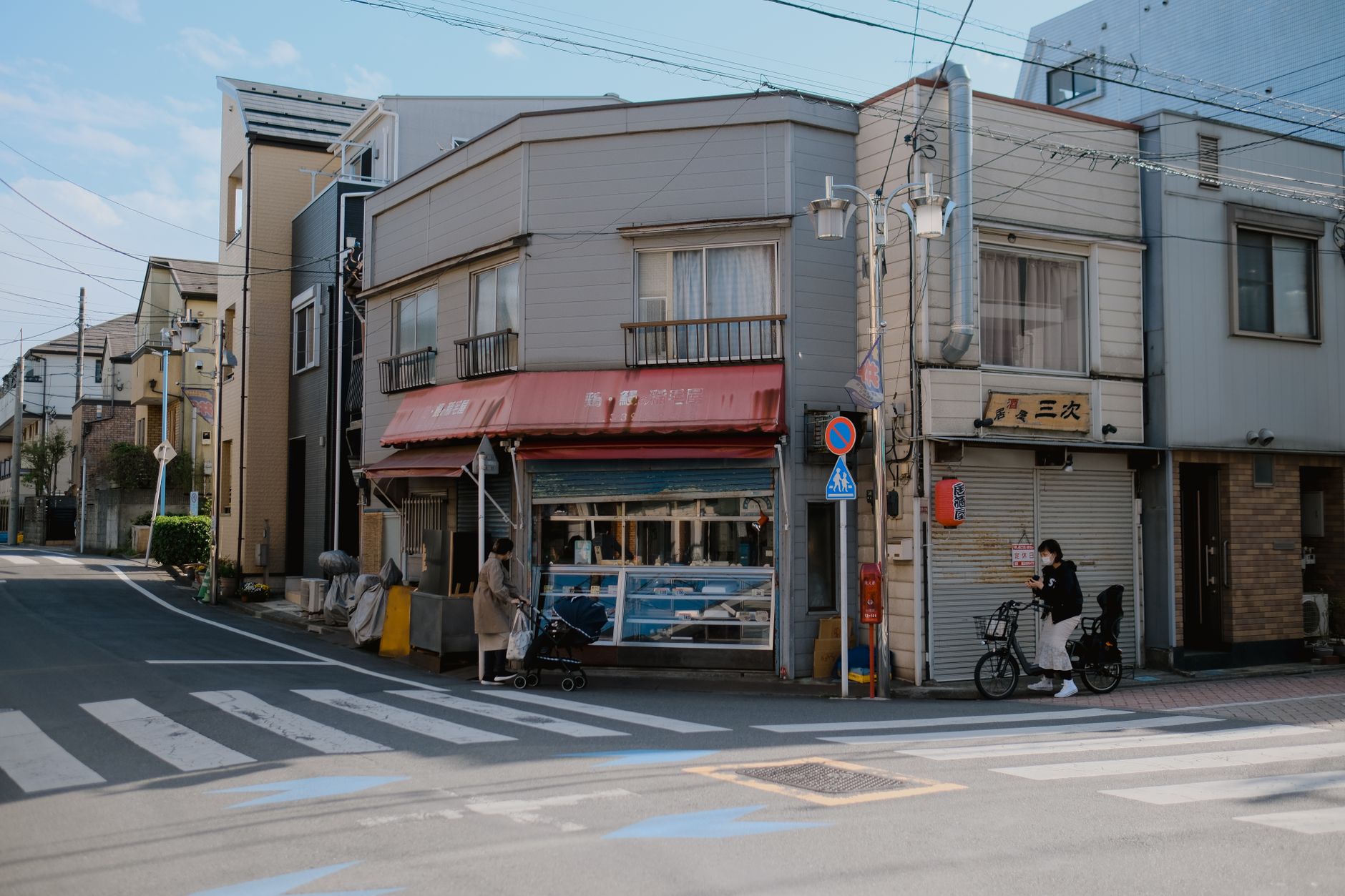
“Fifteen-minute city” has become one of the most widely used—and often misunderstood—phrases in urban planning discourse. At first glance, it sounds almost like a geometric rule: drawing a circle around your home and demanding that everything you need be inside it. In reality, the key point is much simpler and far more practical: how many of our daily activities can we easily reach without turning every trip into a minor expedition?
This applies to schools, supermarkets, pharmacies, parks, public transit stops, sports facilities, cafés, or public services. It does not mean eliminating longer journeys, nor does it envision completely self-sufficient neighborhoods. It simply means reducing mandatory travel.
Fifteen minutes is a metric, not a dogma
The value of the idea lies precisely in its immediacy. Instead of talking solely about kilometers, density, or the number of amenities, the city is measured through an individual’s time. Two neighborhoods that look equally spaced on paper can be radically different if one features continuous sidewalks, safe pedestrian crossings, and frequent transit service, while the other requires a car even for basic necessities.
OCSE used local accessibility specifically to evaluate how well cities work for people of different age groups. The findings are telling: in functional urban areas across OCSE countries, only 36% of the population can reach a primary school or childcare facility on foot within fifteen minutes. This indicates that proximity, even before serving as an urban planning theory, remains an unevenly distributed resource.
Distance weighs differently on people
A twenty-minute commute might seem trivial to someone with a car and a flexible schedule. It can become far more taxing for an older adult, a child, a person with disabilities, or anyone who has to chain school drop-offs, work, grocery shopping, and family care into a single trip. The fifteen-minute city thus serves as a lens through which to examine urban equity.
UN-Habitat frames proximity-based approaches within a broader issue: spatial inclusion. It is not enough for a city to offer high-quality services if a segment of the population faces excessive barriers to access them. Proximity and connectivity must therefore be considered together.
Putting a service on the map is not enough
The physical presence of a school or transit stop does not automatically equal accessibility. The quality of the route matters. A narrow sidewalk, a street that is difficult to cross, a bike lane that abruptly ends, or an infrequent bus can turn a few hundred meters into a much greater perceived distance.
That is why proximity-based urban planning is not just a matter of destinations. It is about the space connecting them. A neighborhood works when walking is a genuine option, not a theoretical one; when public transit is reliable enough not to require massive time buffers; and when people of varying physical abilities and ages can navigate the same paths.
The most underrated advantage is time
Much of the debate around mobility focuses on emissions, and understandably so. The European Commission estimates that urban areas generate roughly 23% of transport-related greenhouse gas emissions in the European Union. Yet proximity saves another critical resource: time.
Shaving ten minutes off a commute made twice a day adds up to hours over the course of a month. An errand run on foot on the way home eliminates a separate trip. A nearby school reshapes an entire family’s daily routine. A well-connected transit stop expands the range of destinations reachable without a car.
Proximity doesn’t eliminate the center: it multiplies it
One implicit criticism of the model is the idea that it might diminish urban variety. But a well-designed proximity city does not expect people to stay confined to their neighborhood. It does the opposite: it creates neighborhoods complete enough so that residents are not forced to converge on the same handful of hubs for everyday needs.
People still travel across town for work, culture, friends, events, and sheer curiosity. They simply do not have to do so just to buy bread or visit a green space. It creates a city with many starting points, not one defined by boundaries.
A useful question for any neighborhood
Perhaps the best way to apply the 15-minute city concept is to set the number aside for a moment and ask a few fundamental questions: What can I do close to home? How safe is it to get there? How much does the answer change if I am eight years old, seventy-five, or using a wheelchair? How much time do I lose every day simply because basic services are too far away?
From this perspective, the fifteen minutes are not a perfect promise. They are a test. And the result says far more about the quality of a neighborhood than simple distance from the center does.


