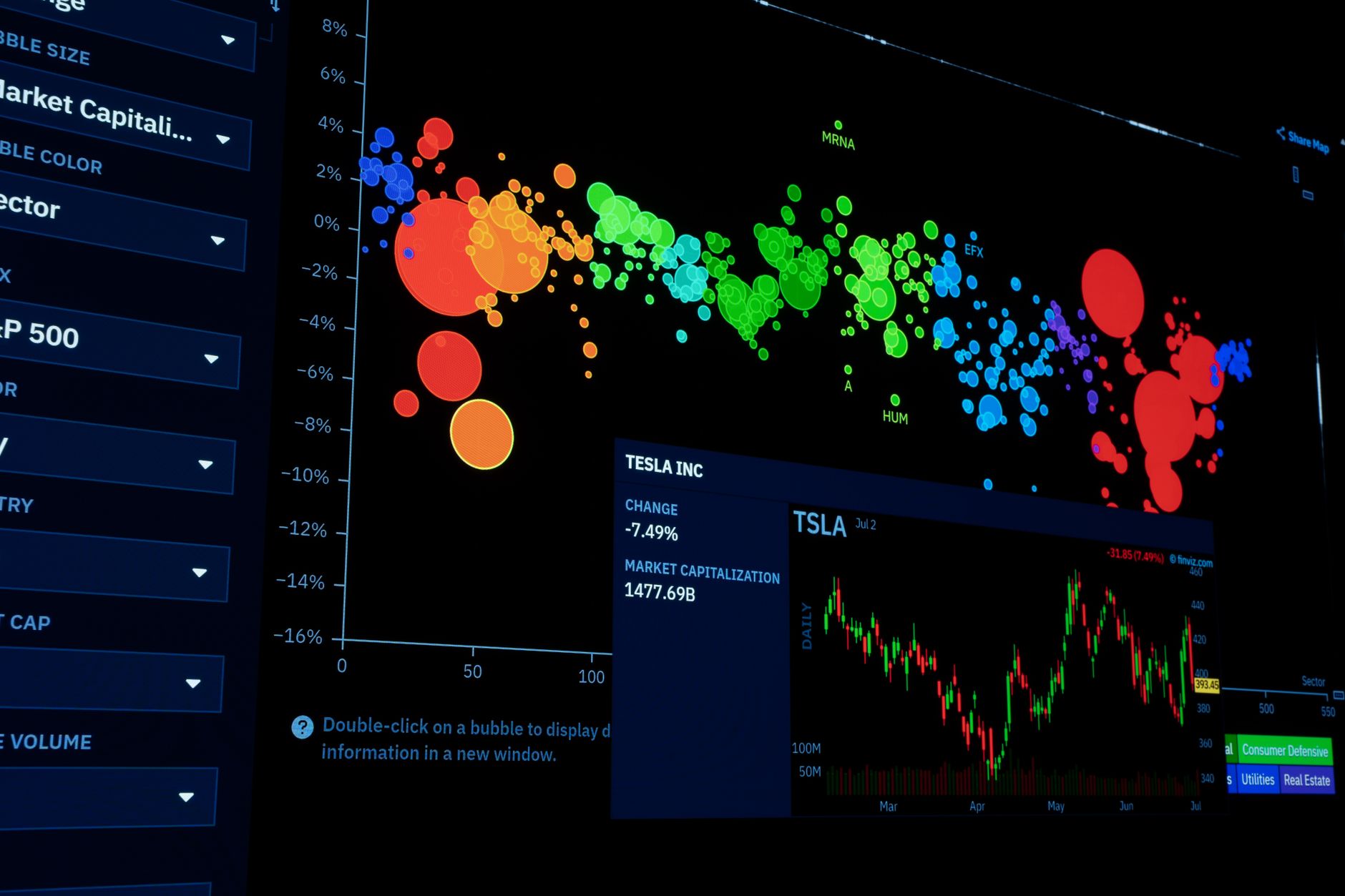
Kalshi wants to bring perpetual contracts tied to stocks and ETFs to the United States, featuring continuous trading and no traditional expiration date. The underlying assets mentioned include Tesla and Nvidia, two of the most popular stocks among retail investors. According to CoinDesk, the prediction market operator intends to seek approval for around sixty products, opening a new front in the debate among US regulators over where the derivatives market ends and the securities market begins.
Perpetual futures have become one of the most popular forms of trading in the crypto world. They allow traders to take bullish or bearish exposure without a fixed expiration date, relying on funding mechanisms to keep the price aligned with the underlying asset. Bringing this structure to equities would mean offering a product that economically resembles an equity derivative but could be governed under rules different from those of traditional exchanges.
The core issue is which authority has jurisdiction
In the United States, the SEC primarily oversees securities markets, while the CFTC regulates futures and commodity derivatives. Kalshi operates under the CFTC as a designated contract market. However, if a perpetual product tracks the performance of a stock, the distinction becomes less straightforward. This is where the regulatory battle begins.
The issue is not merely bureaucratic. Transparency requirements, margins, investor protections, and distribution limits all depend on the regulator. A 24/7 product may broaden access, but it also exposes users to leverage and volatility during periods of thinner liquidity.
Crypto has accustomed the market to continuous trading
Traditional exchanges have set hours and limited after-hours sessions. In crypto, trading never stops. Younger investors have grown accustomed to buying or selling at any time, putting pressure on traditional financial infrastructure.
Nasdaq, NYSE, and other operators are already exploring longer windows. Perpetuals represent an even more radical take on that trend: not just extended hours, but a product engineered from the ground up to operate continuously.
Tesla and Nvidia are ideal underlyings for retail investors
It comes as no surprise that Kalshi is looking at stocks like Tesla and Nvidia. They offer volatility, media attention, and a vast retail investor base, making them ideal for testing a format that thrives on frequency and liquidity.
Yet it is precisely this popularity that heightens concerns. A perpetual contract may appear straightforward in its interface, but it embeds funding, leverage, and liquidation risks that traditional stock purchases do not present in the same way. The quality of customer communication will therefore be critical.
Financial infrastructures are converging
Prediction markets, crypto exchanges, brokers, and stock exchanges are steadily encroaching on one another's territory. Companies are striving to offer events, equities, tokens, and derivatives within the same environment. For regulators, legal categories designed for separate markets are becoming increasingly difficult to enforce.
Kalshi's project remains a proposal and will require regulatory approvals, meaning it should not be portrayed as an already available product. However, the very fact that a regulated US operator wants to import perpetuals from the crypto world shows how quickly ideas born on the fringes are entering mainstream finance. The next battle will not just be over what can be traded, but over which regulator has the authority to decide how.
Sources